
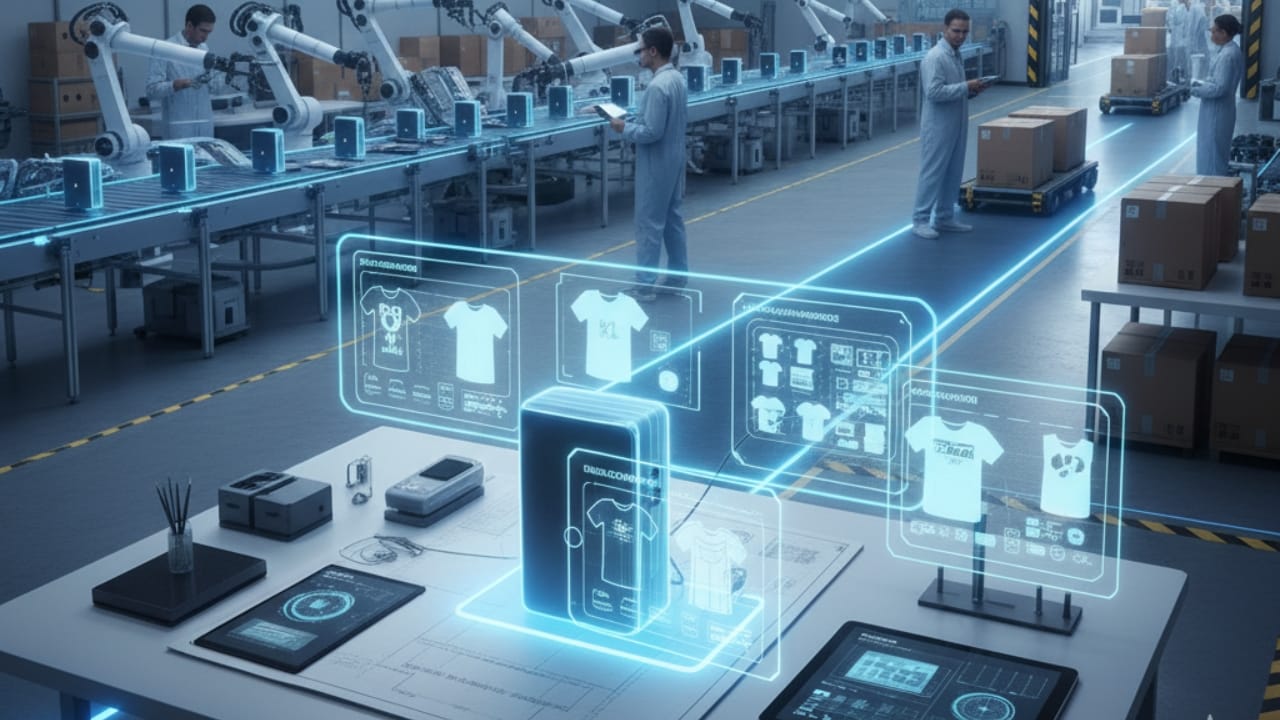
Bringing a product idea to life is no longer the biggest challengescaling it efficiently is. For startups, D2C brands, and manufacturers in India, the journey from prototype to mass production manufacturing often determines whether a product succeeds globally or stalls locally.
This guide breaks down the entire manufacturing lifecycle, explains common bottlenecks, and shows how digital factory networks are reshaping how products move from concept to commercial scale.
Why the Prototype-to-Mass Production Gap Is So Hard
Most product failures don’t happen at the idea stage—they happen during manufacturing scale-up.
Traditional manufacturing models struggle because of:
- Limited access to verified factories
- High minimum order quantities (MOQs)
- Long tooling and production lead times
- Poor quality consistency at scale
- Fragmented supplier coordination
Competitor platforms often focus on either prototyping or bulk manufacturing, leaving businesses stuck in between. The modern approach demands end-to-end visibility and flexibility.

Step 1: Turning a Prototype Into a Manufacturable Design
A prototype proves the concept—but not manufacturability.
At this stage, manufacturers must focus on:
- Design for Manufacturing (DFM)
- Material optimization and cost control
- Tolerance standardization
- Process selection (CNC, injection molding, casting, fabrication)
Early design decisions directly impact unit economics, scalability, and quality control. Digital manufacturing platforms enable collaboration between designers, engineers, and factories before production begins.
Step 2: Supplier Validation and Pilot Production
Before mass production, pilot runs are critical.
Key goals of pilot manufacturing:
- Validate tooling and production workflows
- Identify quality deviations early
- Optimize cycle times and yields
- Test packaging and logistics readiness
Modern buyers prefer pre-verified factory ecosystems that reduce onboarding risk. Platforms like Factori.com aggregate compliant manufacturers, enabling faster transitions from prototype to production-ready batches.
Step 3: Scaling to Mass Production Without Losing Control
Scaling manufacturing introduces new risks:
- Quality inconsistency across batches
- Supply chain delays
- Cost overruns
- Communication breakdowns
To scale successfully, businesses need:
- Real-time production visibility
- Standardized quality benchmarks
- Flexible capacity allocation
- Data-driven demand planning
This is where factory-to-factory (F2F) digital models outperform traditional sourcing. Instead of relying on a single supplier, production can be distributed across multiple vetted factories—without losing control.
Step 4: Quality Assurance, Compliance, and Certifications
Mass production demands repeatable quality.
Key quality checkpoints include:
- Incoming raw material inspection
- In-process quality control
- Final batch testing
- Compliance with domestic and export standards
Digitally managed manufacturing networks improve traceability, audit readiness, and compliance documentation, strengthening trust with global buyers and enterprise customers.
Latest article: Transforming B2B Sourcing in India with Live Stock Boards
Step 5: From Production to Market Readiness
Manufacturing doesn’t end when production finishes.
Post-production considerations:
- Ready-to-ship inventory planning
- Warehousing and fulfillment integration
- Export documentation and logistics
- Demand-linked replenishment
Platforms that combine manufacturing + commerce + distribution enable businesses to move faster, reduce working capital lock-in, and respond to market demand dynamically.
The Future of Prototype to Mass Production Manufacturing
The future belongs to connected manufacturing ecosystems, not isolated factories.
Businesses that adopt digital manufacturing platforms gain:
- Faster time-to-market
- Lower capital risk
- Scalable production capacity
- Global market access
This shift is transforming India into a manufacturing-first, platform-powered economy.
Conclusion
The journey from prototype to mass production manufacturing is no longer linear—it’s digital, data-driven, and collaborative. Companies that embrace modern manufacturing networks can scale faster, compete globally, and build resilient supply chains.Looking to move from prototype to scalable production—without supplier risk or long lead times?
Explore Factori.com to connect with verified manufacturers, flexible production capacity, and ready-to-scale factory networks.
FAQs
It includes design optimization, pilot production, supplier validation, quality assurance, and scalable manufacturing execution.
Timelines vary by product, but digital manufacturing platforms can reduce lead times by 30–50%.
Quality consistency, supplier reliability, cost control, and production scalability are the most common challenges.
By using digital factory platforms that offer flexible MOQs, verified suppliers, and real-time production visibility.
Yes. India offers cost advantages, skilled labor, and growing digital manufacturing infrastructure.
Leave a Reply