
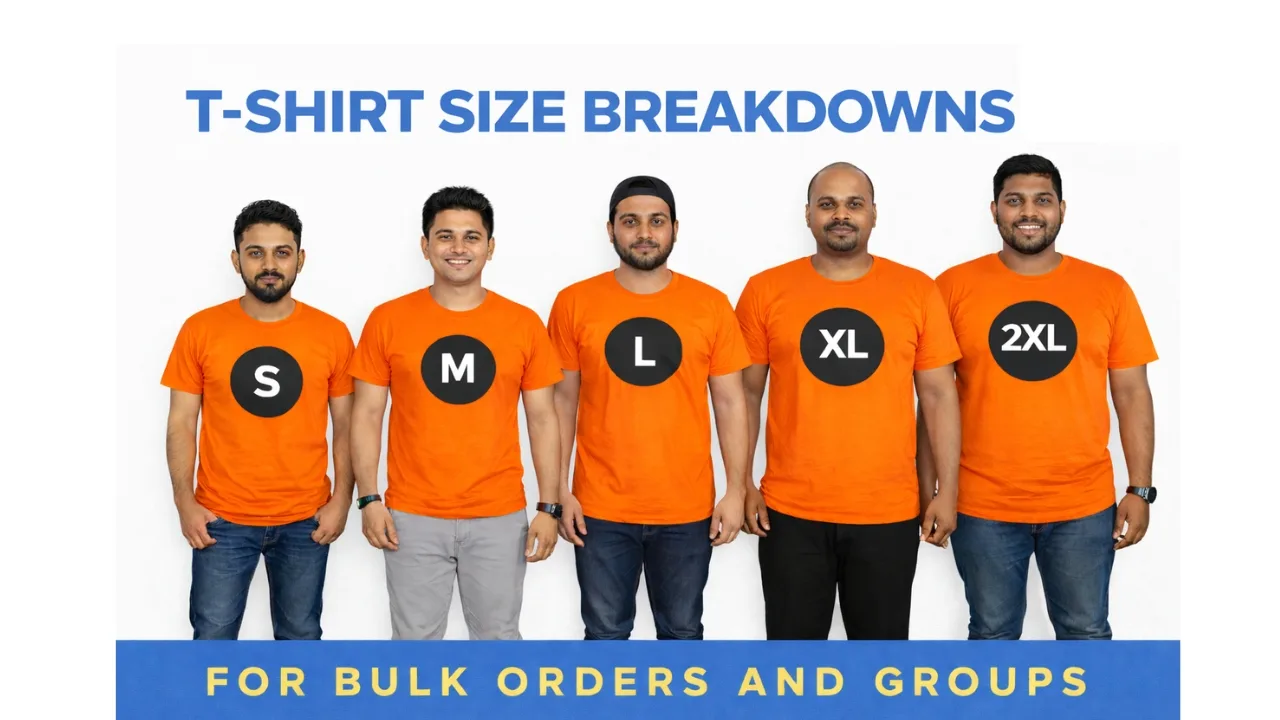
Ordering T-shirts for a group sounds simple—until half the team says the fit is wrong. Whether you’re planning corporate merchandise, school reunions, sports events, employee uniforms, or promotional giveaways, getting group T-shirt sizing right is a supply-chain decision, not just a design choice.
This guide explains how to order the right T-shirt sizes for groups, using data-driven sizing strategies that modern brands and organizations rely on to reduce wastage, returns, and dissatisfaction.
Why Group T-Shirt Sizing Is More Complex Than You Think
Unlike individual purchases, group apparel orders must account for body diversity, fit preferences, gender differences, and fabric behavior. Most sizing errors happen because organizers rely on guesswork instead of structured sizing systems.
Poor sizing leads to:
- Unused inventory
- Re-printing costs
- Negative brand perception
- Lower event engagement
Modern merchandise planning treats sizing as part of experience design, not an afterthought.
Step 1: Understand the Purpose of the T-Shirts
Before choosing sizes, define how the T-shirts will be used:
- Corporate uniforms → relaxed or regular fit
- Event giveaways → size-inclusive distribution
- Retail resale or D2C merch → true-to-size accuracy
- School or alumni events → comfort over trend
Purpose directly impacts size ratios and fit types.
Step 2: Always Use a Size Chart (Never Guess)
The most critical step in how to order the right T-shirt sizes for groups is using a brand-specific size chart. Sizes vary across manufacturers due to:
- Fabric GSM differences
- Shrinkage allowance
- Fit cuts (slim, regular, oversized)
Best practice:
- Share the size chart digitally
- Highlight chest width and length
- Avoid “S/M/L guessing”
Professional brands never order group apparel without validated measurements.
Step 3: Collect Sizes the Smart Way (Forms > Verbal)
Avoid verbal size collection—it’s inaccurate.
Use:
- Google Forms
- WhatsApp polls with charts
- Spreadsheet tracking
Ask for:
- Preferred size
- Fit preference (regular / relaxed)
- Gender-neutral option if available
Step 4: Use Proven Size Ratio Distribution (If Data Isn’t Available)
When individual size collection isn’t possible, use industry-tested size ratios:
Standard Adult Group Ratio (India):

- XS – 1%
- S – 10%
- M – 23%
- L – 31%
- XL – 23%
- XXL – 9%
- XXXL – 3%
Adjust ratios based on:
- Audience age
- Region
- Fit style (oversized needs fewer XLs)
This approach is widely used in corporate procurement and bulk merchandising.
Step 5: Choose the Right Fabric & Fit Combination
Sizing is incomplete without fabric context.
Consider:
- Cotton vs cotton blends
- Pre-shrunk fabrics
- Unisex vs gender-specific cuts
For group orders, unisex regular fit with pre-shrunk fabric reduces complaints by over 40% (industry average).
Step 6: Always Add a Buffer (But Not Excessively)
Smart organizers add:
- 5–10% extra units
- Mostly in M, L, and XL
Avoid over-buffering—it ties up capital and inventory.
Why Professional Brands Rely on Structured Apparel Fulfillment
Modern apparel platforms like factori.com streamline group T-shirt ordering by:
- Providing standardized size charts
- Offering fit-tested apparel
- Managing bulk production and quality checks
- Reducing sizing-related rework
This is how brands scale merchandise without friction.
Conclusion: Sizing Is a Strategy, Not a Guess
Learning how to order the right T-shirt sizes for groups is about applying structure, data, and experience. The difference between a successful apparel order and a costly mistake lies in planning, not printing.
When sizing is done right, your T-shirts become wearable brand assets—not leftover stock.
Planning a bulk or group T-shirt order?
factori.com helps businesses, schools, and event organizers manage sizing, sourcing, and fulfillment—without the guesswork.
Start your group apparel journey with confidence.
FAQs
Use a size chart, collect individual preferences where possible, or apply standard size ratio distribution based on audience type.
Medium and Large are the most commonly ordered sizes in adult group apparel orders in India.
Yes. Add a 5–10% buffer, mainly in medium and large sizes, to handle last-minute needs.
Yes. Unisex regular-fit T-shirts simplify sizing and reduce complexity for mixed-gender groups.
By using size charts, pre-shrunk fabrics, structured data collection, and professional apparel platforms like factori.com.
Leave a Reply