
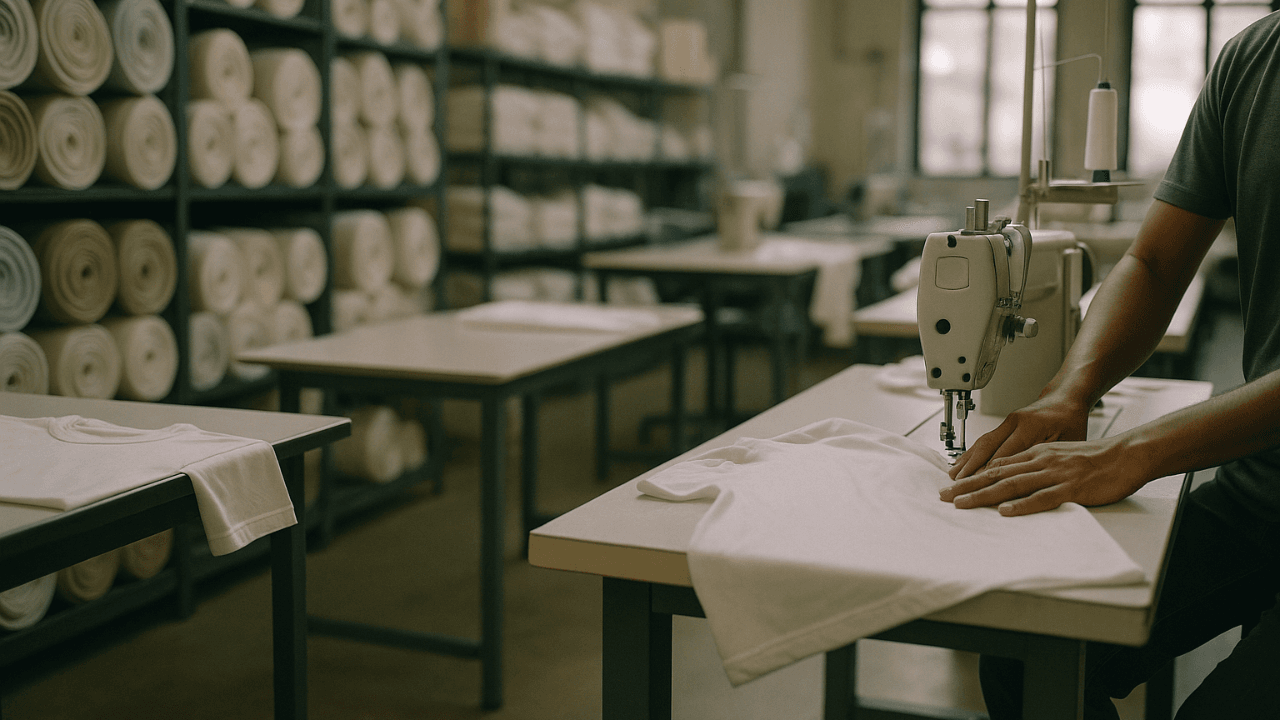
The Indian apparel industry has become one of the most exciting spaces for new-age entrepreneurs. And within apparel, T-shirts are the single most popular starting point. They’re versatile, low in complexity, and universally demanded — but also deceptively tricky. Many new brands underestimate what it takes to build high-quality, scalable T-shirt manufacturing systems in India. They assume the process is simple: find a printer, get designs printed, sell online.
Reality is far more layered.
Manufacturing involves fabric science, vendor reliability, margins, MOQ pressures, fit consistency, costing knowledge, and supply chain discipline. Brands that understand this early win; brands that don’t often crash before their second batch.
This guide breaks down the entire journey — from starting small to scaling intelligently — so you can build a strong, profitable T-shirt brand in India without falling into the common traps.
Why T-shirts Are the Most Preferable Starting Point

T-shirts check every box for a beginner: low product complexity, mass-market appeal, and predictable demand. But that doesn’t mean they’re easy. The category is extremely competitive, and the only way to outperform is to build strength in the fundamentals.
What customers see as “good quality” usually comes from:
- fabric consistency
- fit accuracy
- solid stitching
- print durability
- shrinkage control
These are all manufacturing-driven, not just design-driven. When everyone is selling similar silhouettes, your manufacturing execution becomes the differentiator.
Understanding the Indian Manufacturing Landscape
India is a textile powerhouse. But the ecosystem is fragmented — and that’s where most beginners get confused.
Major Hubs
- Tiruppur: Knitwear capital of India; specialized in cotton tees, bulk manufacturing, and export-grade factories.
- Ludhiana: Good for winter wear, blends, fleece, and hosiery.
- Surat: Synthetic fabrics, poly blends.
- Bangalore / Noida: Mid-to-large-scale factories for structured garments.
Different hubs suit different brands. You can’t expect export-grade stitching in a micro unit or low-MOQ flexibility in a massive factory.
Follow @factori.com_official to watch how we create custom T-shirts, uniforms, and merch — one order at a time!
Types of Factories
- Small tailors / micro units: Low MOQs, flexible, but inconsistent.
- Mid-sized factories: Good balance of price, quality, timelines.
- Large factories / exporters: High quality, strict MOQs, stable processes.
The trick is matching your brand stage with the right vendor. Early brands often overshoot — approaching factories that aren’t aligned with their order size or capacity. This causes delays, negotiation issues, or outright rejections.
Fabric: The Soul of Your Product
Customers don’t judge your brand by design alone — they judge it by touch, comfort, breathability, and fit. That’s why fabric selection decides 70% of your brand perception.
Common T-shirt Fabric Options
- 180–200 GSM Super Combed Cotton: Ideal for most premium tees.
- 220–240 GSM Heavyweight Cotton: Streetwear-grade, structured feel.
- 160 GSM Cotton Lycra: Stretchable, ideal for activewear.
- Poly-cotton blends: Value segment; durable, low-cost.
- Modal / Rayon / Bamboo blends: High softness, premium segment.
- Recycled cotton: Growing trend in sustainable fashion.
Why Fabric Matters Beyond the Basics
Fabric affects:
- shrinkage (post-wash fit)
- print output
- color richness
- durability
- weight and drape
- price-per-unit
- MOQ (because mills sell in rolls)
Many new brands mistakenly focus only on GSM, thinking “higher GSM = better quality.” But knitting quality, compacting, fiber type, and dyeing quality matter more.
Sampling: The Most Important Step Founders Rush Through
Sampling isn’t just about viewing the final look. It’s a technical checkpoint.
Your sample must validate:
- shrinkage behaviour after washing
- stitching quality (especially shoulder, sleeve, and side seams)
- rib quality around neck
- print accuracy and colorfastness
- fit + measurements across sizes
Skipping or rushing sampling is one of the biggest rookie mistakes. Even a 6–8% fabric shrinkage can destroy fit and lead to customer complaints. Always wash-test your samples.
Minimum Order Quantity (MOQ): Why It Exists & How to Work With It

MOQ scares new brand owners, but it’s simply a byproduct of manufacturing economics.
Why MOQs Exist
- Fabric is purchased in rolls, not meters.
- Printing setups require minimum batching.
- Factories allocate labour + machine time.
- Cutting & stitching become inefficient at tiny batches.
- Dyeing units don’t process small quantities.
Typical T-shirt MOQs in India range from:
- 50–150 pcs per color/design (small units)
- 300–800 pcs per color (medium factories)
- 1,000+ pcs per style (large exporters)
How to Work With Smaller MOQs
- Reduce color variants.
- Pick fabrics that are always in stock.
- Stick to common GSMs.
- Minimize print placements.
- Use standard fits instead of custom patterns.
These reduce operational complexity — and factories reward less complexity with lower MOQs.
Cost Breakdown: What Actually Affects Your COGS
New brand owners often ask, “What is the cost of manufacturing?”
The real answer: It depends on structure, not assumptions.
Typical cost components:
- Fabric cost (largest portion)
- Cutting and stitching
- Print/embroidery
- Trims (labels, tags, tapes)
- Finishing and packing
- Transport / logistic charges
- Rejects, wastage buffer
Beyond manufacturing cost, you must also consider:
- marketplace fees
- payment gateway charges
- marketing CAC
- GST
- return % (especially COD)
- shipping and reverse shipping
Your final selling price isn’t based on manufacturing cost alone — it must work backward from all downstream expenses.
Scaling Your Brand Without Losing Money
Scaling doesn’t mean producing more.
Scaling means increasing profit while maintaining control.
1. Standardize Your Best-Selling Fit
Every brand eventually has a “winning fit.”
Document it.
Lock it.
Never change it without strong reason.
2. Don’t Scale on Vanity Metrics
Likes and comments don’t predict sales.
Scale only when:
- a design sells consistently for 30–60 days
- return rates stabilize
- size distribution becomes predictable
3. Build Multiple Vendor Relationships
Avoid relying on a single manufacturer. Delays, capacity issues, or price hikes can stop your entire business.
4. Manage Cash Flow Like a Scientist
Your biggest enemy is dead inventory. Every unit sitting unsold kills future flexibility.
Use:
- batch-based launches
- seasonal planning
- demand forecasting
- stock rotation discipline
This helps you scale without burning cash.
Costly Mistakes Founders Should Avoid
These are the most common mistakes new apparel brands make:
- launching with 10–20 SKU variants
- not testing shrinkage before finalizing fabric
- over-ordering on optimism
- depending on one vendor for everything
- ignoring fit consistency across batches
- not calculating returns as part of COGS
- underpricing due to poor costing knowledge
Avoiding these mistakes saves months of stress and lakhs of rupees.
Future Trends Shaping T-Shirt Manufacturing in India
The industry is evolving rapidly:
- smaller batch cycles
- on-demand manufacturing
- AI-driven forecasting
- sustainable fabric adoption
- premium basics (high-demand trend)
- faster design-to-production workflows
Brands that adapt early grow faster and with lower risk.
Conclusion
T-shirt manufacturing in India offers massive potential, but it rewards brands that understand the operational fundamentals behind the product. Designs attract customers, but manufacturing retains them. When your fits stay consistent, your stitching stays clean, your fabric feels premium, and your shrinkage stays controlled — that’s when customers trust your brand enough to buy again.
Scaling a T-shirt business is not about producing more; it’s about producing smarter. By choosing the right vendors, managing MOQs responsibly, controlling costs, and planning inventory with discipline, you can grow sustainably instead of gambling on guesswork. The brands that win are the ones that blend creativity with operational intelligence — and the sooner you build that foundation, the faster your apparel journey becomes profitable and predictable.
FAQs
You can start by choosing a niche, sourcing reliable fabric suppliers, finding a stitching unit or factory, creating sample pieces, testing shrinkage and fit, finalizing MOQs, and then starting production in small batches. A structured manufacturing plan helps reduce risk and cost.
Most Indian factories have MOQs between 100–300 pieces per color for smaller units and 500–1,000+ pieces for mid to large factories. MOQ depends on fabric rolls, printing setup, and factory capacity.
The cost varies based on fabric GSM, cotton quality, printing method, stitching standards, and finishing. A basic tee can cost ₹120–₹200, while premium or heavyweight options may cost ₹250–₹450+ per piece.
Check for consistency in stitching quality, fabric sourcing, timely delivery, transparent costing, low defect rates, and willingness to do sampling. Always begin with small batches to test reliability before scaling.
Common mistakes include ordering too many SKUs, ignoring shrinkage tests, relying on one vendor, choosing poor-quality fabric, miscalculating costs, and scaling production without validating actual demand.
Leave a Reply