
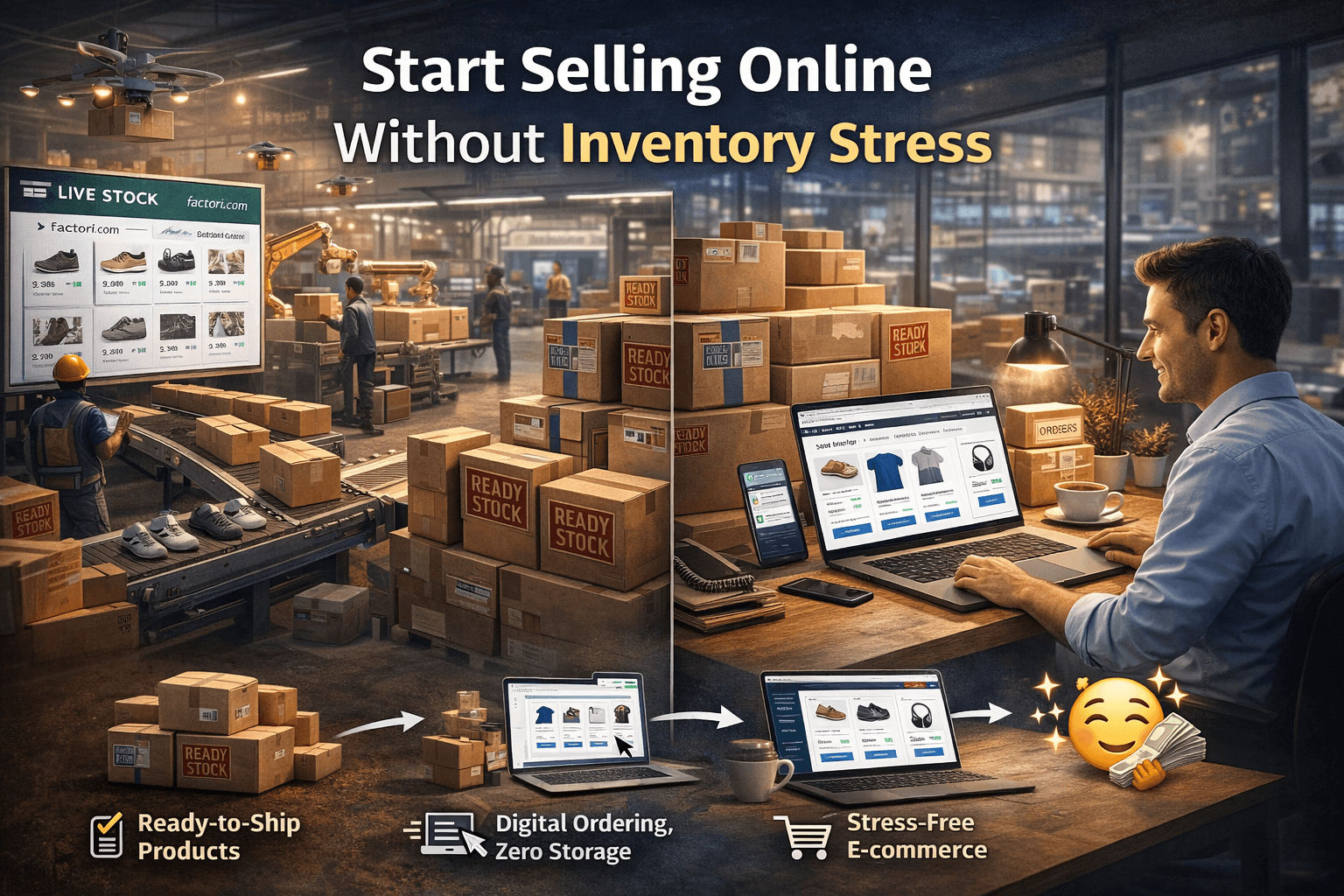
Selling online has never been easier-yet inventory stress remains one of the biggest barriers for businesses entering digital commerce. Overstocking ties up capital, understocking leads to lost sales, and managing warehousing, fulfillment, and returns quickly becomes overwhelming.
For manufacturers, traders, MSMEs, and new-age brands in India, the question is no longer whether to sell online, but how to start selling online without inventory stress.
This blog explains why inventory stress exists, why traditional e-commerce models fall short, and how modern, platform-led approaches are redefining online selling.
Why Inventory Stress Is a Major Problem in Online Selling
Most online selling models are built around inventory ownership. Businesses are expected to buy stock upfront, store it, and manage fulfillment themselves. This creates multiple challenges:
- High working capital lock-in
- Risk of unsold or obsolete stock
- Storage and warehousing costs
- Demand forecasting errors
- Operational complexity
For growing businesses, inventory becomes a liability instead of an asset.

The Traditional E-commerce Advice Is Incomplete
Most “sell online” guides focus on:
- Website creation
- Marketing and ads
- Payment gateways
Very few address the supply-side reality-where products come from, how fast they move, and how risk is managed.
In India, this gap is even wider due to:
- Fragmented supply chains
- Dependency on distributors
- Limited inventory visibility
To truly scale, businesses need an inventory-light or inventory-free selling model.
How to Start Selling Online Without Inventory Stress
1. Shift from Inventory Ownership to Inventory Access
The fastest-growing online sellers no longer own all their stock. Instead, they access ready inventory from verified suppliers or factories only when demand exists.
This reduces risk and improves cash flow.
2. Use Ready-to-Ship Supply Networks
Selling products that are already manufactured and available for dispatch eliminates production delays and forecasting pressure. Ready-to-ship sourcing allows businesses to focus on sales instead of stock management.
3. Adopt a Platform-Led Selling Model
Modern B2B and retail platforms integrate sourcing, inventory discovery, and order fulfillment. This removes the need for manual coordination between suppliers, warehouses, and sales channels.
4. Start with Demand, Not Stock
Instead of building inventory first, successful sellers validate demand digitally and then source products accordingly. This demand-first approach minimizes unsold stock and improves margins.
5. Leverage Factory-to-Factory (F2F) and Direct Supply Models
Direct access to manufacturing units allows sellers to source products faster, negotiate transparently, and scale without inventory overload.
Why Inventory-Light Selling Is the Future of Commerce
Inventory-heavy models were built for scale-through-stock. Modern commerce scales through speed, flexibility, and access.
Inventory-light selling enables:
- Faster go-to-market
- Lower operational risk
- Better working capital efficiency
- Easier product experimentation
- Scalable growth
This shift mirrors how SaaS replaced physical infrastructure—access over ownership.
How factori.com Enables Inventory-Stress-Free Selling
factori.com is designed to help businesses sell online without traditional inventory pressure.
Through its digital ecosystem, businesses can:
- Access ready-to-ship products directly from factories
- Discover live inventory without upfront purchases
- Launch an online store quickly
- Source products only when orders are generated
By combining sourcing, manufacturing, and retail enablement, factori.com allows sellers to focus on growth instead of stock management.
Who Should Use an Inventory-Light Selling Model?
This approach is ideal for:
- MSMEs entering e-commerce
- Manufacturers expanding direct sales
- Traders managing variable demand
- Brands testing new product categories
- Export-focused businesses
For these businesses, reducing inventory stress directly improves profitability and scalability.
Latest article: Traditional Distribution vs Digital Retail Platforms: Why Brands Are Shifting Online
The Bigger Shift: From E-commerce to Digital Trade Ecosystems
Online selling is no longer just about websites and ads. It’s about connected digital trade ecosystems that align demand, supply, and fulfillment.
Platforms that integrate sourcing, inventory, and selling will define the next phase of commerce in India.
Conclusion
Learning how to start selling online without inventory stress is critical for sustainable growth. Inventory-heavy models slow businesses down and increase risk in an already competitive market.
Inventory-light, platform-led selling—enabled by direct factory access and ready-to-ship sourcing—is the smarter way forward.
Start selling online without inventory pressure. Explore digital sourcing and retail enablement at factori.com.
FAQs
You can sell online without inventory by using ready-to-ship sourcing models, digital trade platforms, and direct factory access that allow order-based procurement.
Yes. Inventory-light selling is especially effective in India due to fragmented supply chains and demand variability.
Ready-to-ship sourcing refers to selling products that are already manufactured and available for immediate dispatch, reducing lead time and risk.
Yes. Manufacturers can sell online using digital platforms that manage sourcing, listing, and fulfillment without requiring owned warehouses.
factori.com enables businesses to access live factory inventory, source products on demand, and launch online selling without upfront stock investment.
Leave a Reply