
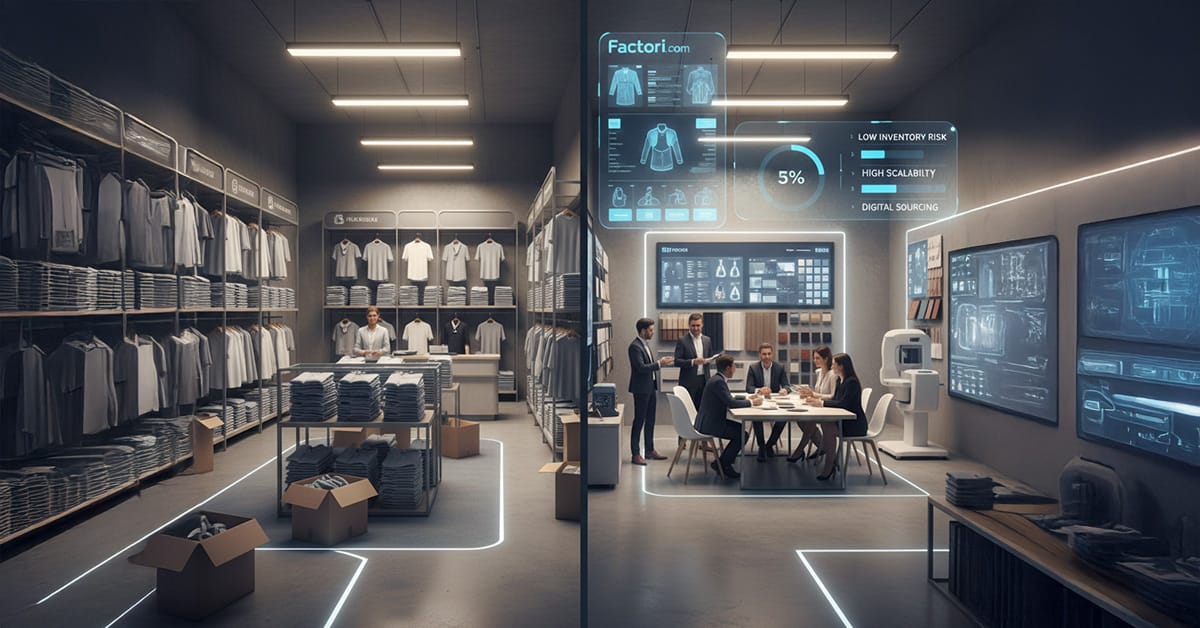
India’s franchise landscape is evolving rapidly. As consumer behavior, supply chains, and digital infrastructure mature, entrepreneurs are reassessing traditional franchise models. In 2026, the key question many investors are asking is: Experience Center vs traditional franchise – what works better?
This comparison is especially relevant in sectors like apparel, manufacturing, and B2B trade, where flexibility and speed increasingly determine profitability. Let’s explore how these two models differ and why experience-center-led franchises are gaining momentum in India.
Understanding the Traditional Franchise Model
A traditional franchise typically operates on a fixed structure. Franchisees invest in:
- Brand licensing fees
- Large physical retail space
- Mandatory inventory procurement
- Centralized product selection
- Rigid operational guidelines
While this model worked well in the past, it presents several challenges in today’s market:
- High upfront capital requirements
- Inventory risk and slow stock movement
- Limited flexibility for local demand
- Dependence on head office supply chains
In a fast-changing market, these limitations reduce agility and margins – especially in Tier 2 and Tier 3 cities.

What Is an Experience Center Franchise?
An experience center franchise is fundamentally different. Instead of functioning as a conventional retail outlet, it acts as a business enablement hub.
Experience centers focus on:
- Product discovery instead of heavy stocking
- Digital sourcing and manufacturing access
- Consultation and order facilitation
- Inventory-light or on-demand models
- Integration of physical presence with digital platforms
This model is increasingly relevant in 2026, where buyers value customization, speed, and transparency over shelf-heavy retail.
Experience Center vs Traditional Franchise: Key Differences
1. Inventory & Risk
Traditional franchises require large upfront inventory purchases. Experience centers minimize this by enabling sourcing or manufacturing only after demand is confirmed.
2. Capital Investment
Experience centers typically require lower working capital since money isn’t locked into unsold stock.
3. Scalability
Traditional franchises scale slowly due to fixed formats. Experience centers scale faster by leveraging digital supply chains.
4. Customer Engagement
Experience centers emphasize consultation, sampling, and customization, offering a higher-value interaction than standard retail selling.
5. Adaptability
Experience centers can serve B2B, institutional, and retail clients from the same location—something traditional franchises struggle to do.
Why Experience Center Franchises Are Winning in 2026
Several macro trends are accelerating this shift:
- Growth of B2B and institutional demand
- Rise of customization and private labeling
- Manufacturing digitization in India
- Entrepreneurs preferring asset-light businesses
- Faster go-to-market expectations
In this environment, experience centers offer better resilience and profitability.
Subscribe to factori.com on YouTube and see how every custom order comes to life — from fabric to finish!
How the factori.com Experience Center Model Stands Out
The Factori Experience Center Franchise is built specifically for this new era of trade and manufacturing.
Key Benefits of Taking the Factori Franchise
- Inventory-light model backed by live stock visibility
- Access to verified Indian manufacturers across apparel categories
- Ability to serve B2B, bulk buyers, institutions, and retailers
- Faster order fulfillment through digital sourcing
- Lower operational risk compared to traditional franchises
- Strong backend support from factori.com’s trade ecosystem
Instead of selling only one brand, Factori franchise partners enable commerce itself, making the model future-proof.
Learn more about the model here:
https://factori.com/franchise-opportunity
Which Model Is Better for 2026?
From a long-term business perspective, experience center franchises outperform traditional franchises on:
- Risk management
- Capital efficiency
- Market adaptability
- Revenue diversification
Traditional franchises may still work for select retail categories, but for apparel, manufacturing, and B2B trade, the experience-center-led approach is clearly better aligned with 2026 realities.
Conclusion
When comparing experience center vs traditional franchise, the winner in 2026 is clear. Entrepreneurs no longer want rigid, inventory-heavy models. They want flexibility, scalability, and digital enablement.
Experience centers—especially those powered by platforms like factori.com—offer exactly that.
If you’re planning to start a future-ready franchise business, explore the