
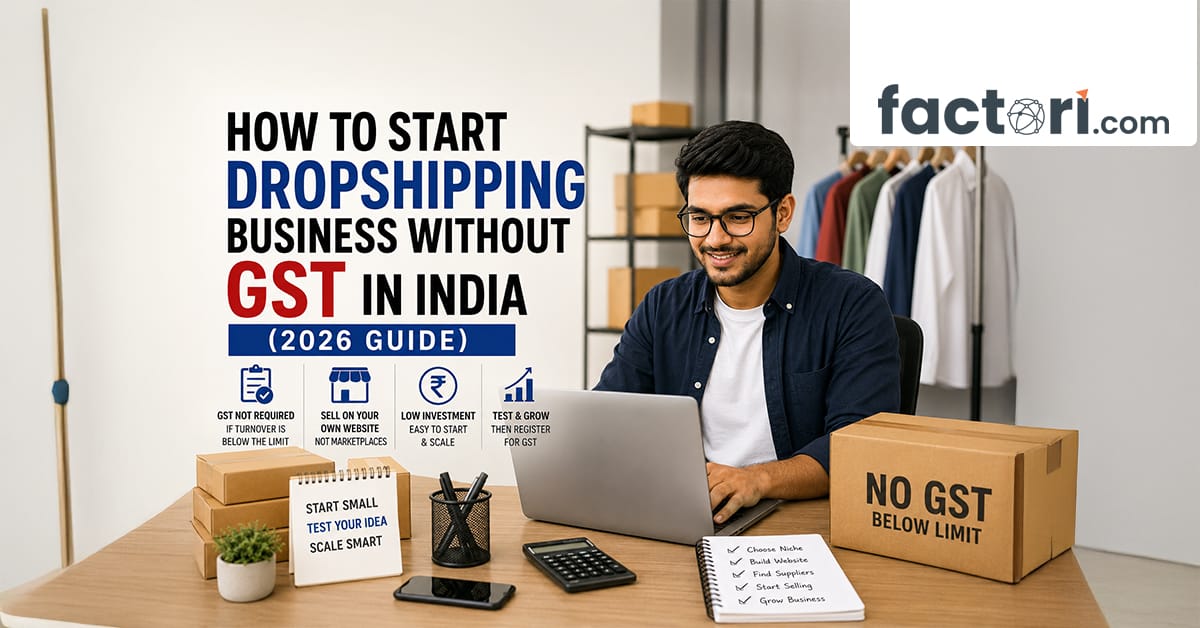
Starting a dropshipping business in India is one of the easiest ways to enter ecommerce. But one of the most common questions beginners ask is:
👉 “Can I start dropshipping without GST in India?”
The answer is yes—but with important conditions.
This guide explains the legal rules, limitations, and practical steps to start a dropshipping business without GST while staying compliant.
Can You Start Dropshipping Without GST in India?
Yes, you can start without GST only in the initial stage, especially if:
- You are testing your business
- Your revenue is below the GST threshold
- You are selling through your own website (not marketplaces)
However, there are limitations you must understand.
Latest article: Best Dropshipping Platform in India for Beginners (2026 Guide)
When GST is NOT Required
From a compliance perspective, GST registration is not mandatory if:
- Your annual turnover is below ₹20 lakh (₹40 lakh for goods in some cases)
- You are not selling on marketplaces like Amazon or Flipkart
- You are operating as an individual or small business
👉 This makes it easier for beginners to start without legal complexity.
When GST Becomes Mandatory
You must register for GST if:
- You sell on ecommerce marketplaces
- Your turnover exceeds the threshold
- You operate as a registered business entity
- You want to claim input tax credit
👉 Ignoring GST when required can lead to penalties.
Step-by-Step Guide to Start Without GST
1. Choose a Niche
Focus on high-demand categories like:
- Fashion and apparel
- Accessories
- Home products
👉 Start with a niche you understand.
2. Build Your Own Website
To avoid GST complications initially, use:
- Shopify
- WooCommerce
👉 Avoid marketplaces in the beginning.
3. Find Reliable Suppliers
Choose suppliers who:
- Offer consistent quality
- Provide fast delivery
- Handle logistics efficiently
👉 You can explore sourcing options on retailing.factori.com to simplify supplier access.
4. Start Selling with Small Volume
Begin with:
- Limited products
- Small marketing budget
- Test orders
👉 This helps you validate your business idea.
5. Accept Payments
Use:
- UPI
- Bank transfer
- Payment gateways
👉 Ensure smooth customer checkout experience.
Advantages of Starting Without GST
- Low initial cost
- Less compliance burden
- Faster setup
- Ideal for testing business ideas
Limitations You Should Know
- Cannot sell on major marketplaces
- Limited scalability
- No input tax credit
- Business credibility may be lower
👉 This is why GST becomes important as you grow.
Latest article: How to Start Dropshipping Business in India (Step-by-Step 2026 Guide)
When Should You Register for GST?
From an expert perspective, you should register when:
- Your sales start increasing
- You want to scale aggressively
- You plan to sell on Amazon/Flipkart
- You want to build a serious brand
Why Supplier Choice Still Matters
Even without GST, your success depends on:
- Product quality
- Delivery speed
- Supplier reliability
👉 Platforms like retailing.factori.com help beginners access scalable supplier networks.
Many successful ecommerce founders start small without GST to test their idea. However, they transition to a registered structure as soon as they validate demand.
👉 The key is to start lean but scale professionally.
Common Mistakes to Avoid
- Ignoring GST rules completely
- Scaling without proper registration
- Choosing low-quality suppliers
- Not tracking revenue
Conclusion
Starting a dropshipping business without GST in India is possible and can be a smart way to test your business idea with minimal risk. However, understanding the limitations and planning for future compliance is essential.
👉 Begin your dropshipping journey with reliable sourcing through retailing.factori.com and scale your business the right way.
Leave a Reply