
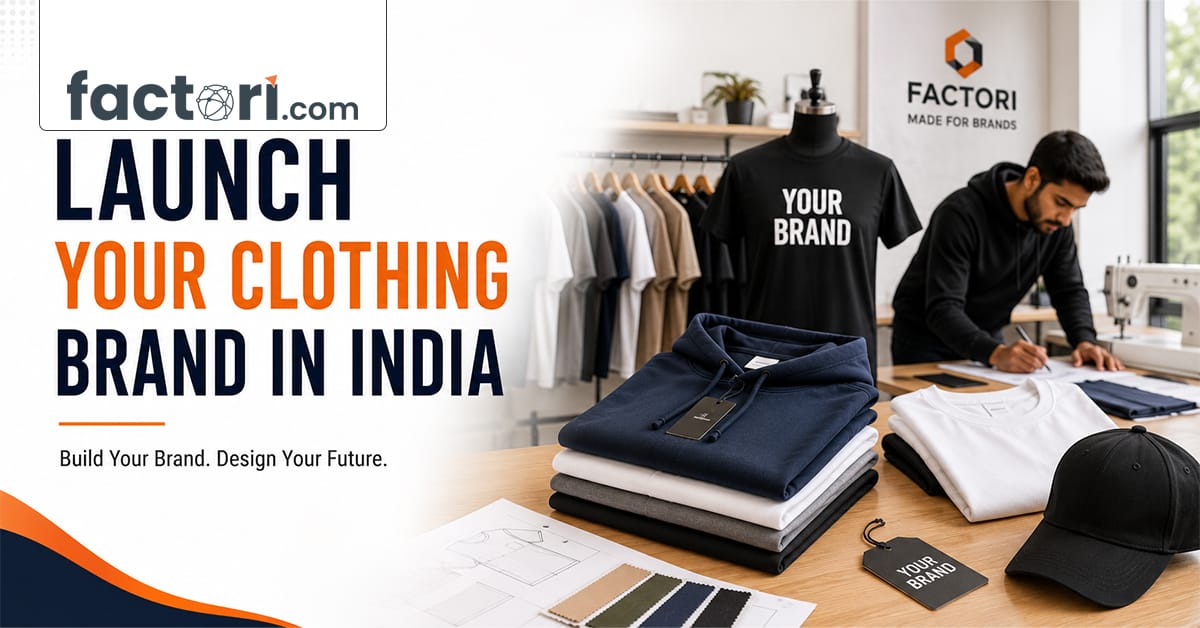
Starting a clothing brand in India has become more accessible than ever.
You don’t necessarily need a physical store, a large warehouse, or your own manufacturing facility to get started. Today, entrepreneurs can build a clothing brand by combining product development, private-label manufacturing, ecommerce, social media, and digital marketing.
But launching a clothing brand successfully requires more than simply putting a logo on a T-shirt.
You need to decide what you’re going to sell, understand your target customers, create a strong brand identity, find the right manufacturing partner, build your online presence, and develop a strategy for attracting customers.
This guide explains how to launch a clothing brand in India step by step, from the initial idea to selling your first products online.
Is Starting a Clothing Brand a Good Business Idea in India?
India has a large and diverse apparel market, creating opportunities for businesses targeting different customer segments.
You could build a brand around:
- Streetwear
- Casual clothing
- Premium basics
- College fashion
- Sportswear
- Corporate apparel
- Sustainable fashion
- Oversized T-shirts
- Custom merchandise
- Niche communities
The important thing is not to try to sell everything to everyone.
A focused brand with a clear audience is easier to market and differentiate.
Step 1: Choose Your Clothing Brand Niche
Your first decision should be determining who your brand is for.
For example:
Streetwear Brand
Target:
- College students
- Young adults
- Fashion-conscious customers
Products could include:
- Oversized T-shirts
- Hoodies
- Sweatshirts
- Caps
Premium Basics Brand
Focus on:
- Quality T-shirts
- Polo T-shirts
- Sweatshirts
- Minimal designs
Sportswear Brand
Products could include:
- Sports T-shirts
- Track pants
- Jackets
- Performance apparel
Custom Merchandise Brand
Target:
- Creators
- Communities
- Businesses
- Colleges
- Events
Your niche determines your products, pricing strategy, branding, and marketing.
Step 2: Research Your Target Customers
Before manufacturing anything, understand your potential customers.
Ask:
- Who will buy the products?
- What styles do they prefer?
- What price range do they consider?
- Where do they discover new brands?
- Which brands do they already purchase?
- What problems do existing products have?
Study competitors, social media trends, customer reviews, and ecommerce marketplaces.
The goal isn’t to copy another brand.
Instead, identify opportunities to create something different or better.
Step 3: Select Your First Products
Don’t launch with 50 different products immediately.
Start with a focused collection.
For example, a new clothing brand could begin with:
- 3–5 T-shirt designs
- 2 hoodie designs
- 2–3 color options
Once you understand which products customers prefer, expand the collection.
Popular Products for New Clothing Brands
- Round Neck T-Shirts
- Oversized T-Shirts
- Polo T-Shirts
- Hoodies
- Sweatshirts
- Jackets
- Caps
Choosing the right initial products helps control complexity while testing demand.
Step 4: Create Your Brand Identity
Your clothing brand needs a recognizable identity.
Develop:
Brand Name
Choose something memorable and relevant to your target audience.
Logo
Create a simple logo that works across:
- Clothing labels
- Packaging
- Website
- Social media
- Marketing materials
Brand Colors
Choose a consistent color palette.
Typography
Use fonts consistently across your website, packaging, and marketing materials.
Brand Voice
Decide how your brand communicates with customers.
For example:
- Premium
- Youthful
- Minimal
- Bold
- Sporty
- Sustainable
Consistency is what makes a small clothing business look like a professional brand.
Step 5: Find a Clothing Manufacturer
This is one of the most important steps.
A good manufacturer can help you produce consistent-quality products while allowing your business to scale.
When evaluating a clothing manufacturer, check:
- Product quality
- Fabric options
- Manufacturing capabilities
- Customization options
- Minimum order requirements
- Sampling process
- Production capacity
- Quality control
- Delivery capabilities
If you’re building a private-label brand, your manufacturer should be able to support your branding requirements.
Step 6: Consider Private Label Manufacturing
Private-label manufacturing allows you to sell products under your own brand while production is handled by a manufacturing partner.
This can include:
- Custom labels
- Hang tags
- Packaging
- Logo branding
- Product customization
For startups, this can be significantly easier than building and operating their own manufacturing facility.
Factori helps businesses manufacture customized apparel under their own brands, including products such as T-shirts, polo T-shirts, hoodies, and other apparel categories.
Step 7: Develop Your Clothing Samples
Never immediately place a large production order without evaluating your products.
Start with samples.
Check:
Fabric
Is it comfortable and appropriate for the intended customer?
Fit
Does the sizing match your target market?
Stitching
Are seams clean and durable?
Printing
Does the artwork look sharp and consistent?
Labels
Are the brand labels properly positioned?
Overall Appearance
Does the finished product match your original concept?
Use feedback from samples before moving to larger production.
Step 8: Decide How You Will Sell
You have several options.
Your Own Website
An independent ecommerce website gives you control over:
- Branding
- Customer experience
- Product presentation
- Marketing
- Customer data
Marketplaces
You can also explore established ecommerce marketplaces to reach existing audiences.
However, marketplace selling can provide less control over your brand experience.
Social Commerce
Instagram, Facebook, YouTube, and other social platforms can help drive customers to your store.
Your Own Online Store
For entrepreneurs who want a branded ecommerce presence without building everything from scratch, retailing.factori.com provides a platform for launching an online store.
This can be particularly useful when you’re focused on building your brand rather than managing complicated technical infrastructure.
Step 9: Create Your Product Pages
Good product pages can significantly influence conversions.
Each product page should include:
- Clear product name
- Multiple product images
- Front and back views where applicable
- Fabric information
- Size chart
- Available colors
- Product description
- Care instructions
- Delivery information
- Return information
Use high-quality images.
Customers cannot physically touch your product online, so product photography needs to communicate quality.
Step 10: Build Your Online Presence
Your website is only one part of your brand.
Create consistent profiles across relevant platforms.
Ideal for:
- Product launches
- Reels
- Fashion content
- Influencer collaborations
YouTube
Useful for:
- Brand stories
- Product reviews
- Behind-the-scenes content
- Styling videos
Useful for visual discovery and fashion inspiration.
Especially useful for corporate apparel and B2B merchandise.
Step 11: Create Content Before Launch
Don’t wait until launch day to start marketing.
Start building interest before your products become available.
Content ideas:
- Behind-the-scenes manufacturing
- Product design process
- Fabric selection
- Packaging previews
- Brand story
- Product teasers
- Founder story
- Customer polls
This helps create anticipation.
Step 12: Launch With a Focused Collection
Instead of launching dozens of products, create a clear first collection.
For example:
Collection: Everyday Essentials
- 3 T-shirt designs
- 2 colors per design
- 1 hoodie
- 1 cap
Create a strong story around the collection.
Your customers should understand:
What is this brand?
Who is it for?
Why should I buy it?
Step 13: Market Your Clothing Brand
You need a consistent customer acquisition strategy.
Social Media Marketing
Create short-form content around:
- Products
- Styling
- Brand story
- Customer reviews
- Behind-the-scenes content
Influencer Marketing
Work with creators whose audiences match your target customer.
Don’t choose influencers based only on follower count.
Look at:
- Engagement
- Audience relevance
- Content quality
- Previous brand collaborations
SEO
Create useful articles around questions your customers search for.
Examples:
- Best oversized T-shirts in India
- How to choose T-shirt fabric
- How to style oversized T-shirts
- Best hoodies for winter
- How to start a clothing brand
SEO can create long-term organic traffic.
Step 14: Track Your Sales and Customer Data
Once your store launches, monitor:
- Website visitors
- Product views
- Add-to-cart rate
- Conversion rate
- Best-selling products
- Repeat customers
- Customer acquisition channels
Don’t assume your first product is your best product.
Let customer behavior tell you what to expand.
Step 15: Scale Your Clothing Brand
Once you identify products that customers love, increase your focus on them.
You can then:
- Add new colors
- Introduce new designs
- Expand sizes
- Launch new collections
- Increase production
- Work with influencers
- Expand into marketplaces
- Introduce accessories
Scaling should follow proven demand rather than simply increasing the number of products.
How Factori Can Help You Launch Your Clothing Brand
Building a clothing brand requires several moving parts.
Factori helps simplify the product and manufacturing side by offering access to customizable apparel and other business products.
You can explore categories such as:
- T-Shirts
- Polo T-Shirts
- Hoodies
- Bags
- Caps
- Corporate Apparel
- Promotional Products
- Corporate Merchandise
For businesses that want to manufacture products under their own brand, Factori can support private-label apparel requirements.
Want to Sell Your Products Online?
After creating your products, the next challenge is building an online store.
That’s where retailing.factori.com can fit into your business model.
Instead of starting from a blank ecommerce setup, entrepreneurs can use the platform to create their own online store and showcase products under their brand.
This creates a simple journey:
Choose Your Niche → Develop Products → Manufacture → Build Store → Market → Sell → Scale
Common Mistakes New Clothing Brands Should Avoid
Launching Too Many Products
Start focused and expand based on demand.
Ignoring Product Quality
Poor quality can damage your brand before it gets established.
Copying Competitors
Study competitors but create your own identity.
Spending Everything on Inventory
Keep enough resources for marketing, content, packaging, and customer acquisition.
Ignoring Customer Feedback
Your customers can tell you what needs improvement.
Launching Without a Marketing Plan
A great product won’t sell automatically.
How Much Does It Cost to Start a Clothing Brand?
There isn’t one fixed cost.
Your investment depends on:
- Number of products
- Production quantity
- Fabric
- Customization
- Packaging
- Website
- Marketing
- Photography
- Logistics
A focused launch can help you test your concept before committing significant resources to larger production.
Final Checklist Before Launch
Before launching your clothing brand, make sure you have:
- Brand name
- Logo
- Target audience
- Product range
- Manufacturer
- Product samples
- Packaging
- Product photography
- Website
- Social media profiles
- Marketing strategy
- Delivery process
- Customer support system
Once these pieces are ready, you’re in a much stronger position to launch.
Conclusion
Launching a clothing brand in India doesn’t require you to build an entire manufacturing operation from scratch.
With the right niche, strong branding, reliable manufacturing partner, professional online store, and consistent marketing strategy, entrepreneurs can build a clothing business step by step.
The key is to start focused, validate your products, listen to customers, and scale based on demand.
If you’re looking for a manufacturing partner, Factori can help with customized apparel and private-label manufacturing. Once your products are ready, retailing.factori.com can help you establish your branded online selling presence.
Launch Your Clothing Brand with Factori
Ready to turn your clothing idea into a real brand?
Factori can help with:
✅ Private-label apparel manufacturing
✅ Custom T-shirts & polo T-shirts
✅ Hoodies & other apparel
✅ Custom branding
✅ Product sourcing
✅ Multiple product categories
✅ Pan-India support
Explore Factori
Main Website: https://factori.com/
Products: https://factori.com/products
Build Your Online Store
Start selling online: https://retailing.factori.com/
Leave a Reply