
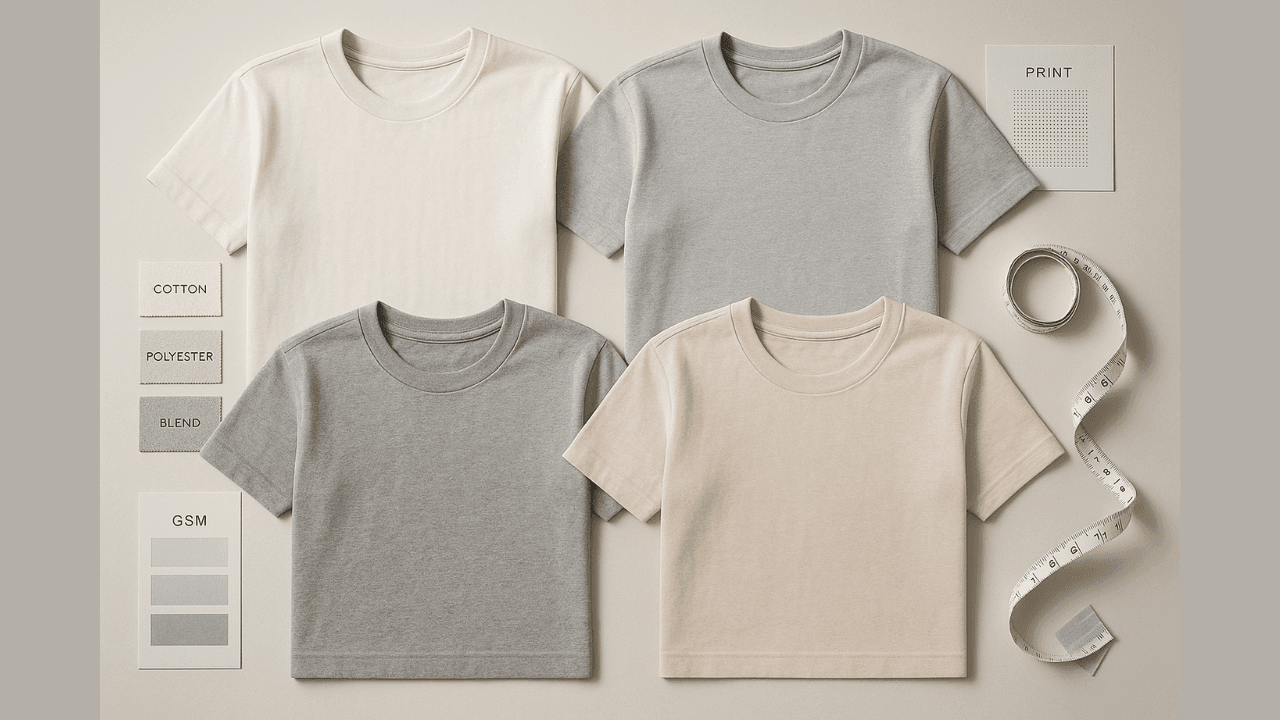
When a company decides to order T-shirts for branding, events, or merchandise, the first reaction is usually excitement. But once you start exploring options, that excitement quickly turns into confusion. There are too many fabrics, too many GSM choices, too many print methods, and every vendor claims to be the best. The result is that many brands either overpay or end up disappointed with what they receive.
The truth is, choosing the right T-shirt is not about selecting the most expensive option. It’s about choosing the option that truly fits your purpose. Once you understand what you need, the process becomes surprisingly straightforward. This guide breaks the decision-making into seven clear steps, so you can confidently pick a T-shirt that represents your brand well and actually feels good to wear.

1. Start by Understanding the Purpose of the T-Shirt
Every good decision starts with clarity. Before discussing GSM or printing, pause and understand the actual purpose behind the order. Brands often skip this step and jump straight into selecting designs, which leads to unnecessary compromises later.
Think about where and how the T-shirt will be used. Is it meant for a promotional campaign where thousands of people will wear it once? Is it something your employees will wear every day and represent your brand in? Is it merchandise that customers will purchase and expect a premium feel? Or is it a one-time event like a marathon or college fest?
When the purpose is defined clearly, your choices regarding price range, fabric type, and printing become far more accurate.
Subscribe to factori.com on YouTube and see how every custom order comes to life — from fabric to finish!
2. Choose the Fabric Based on Comfort, Usage and Longevity
Fabric is the foundation of any T-shirt. A good design on a poor-quality fabric loses its appeal instantly, while a simple logo on a comfortable fabric can make people want to wear it again and again. This is where you should take your time to understand what works best.
100% Cotton:
This is the preferred choice for brands that want comfort and breathability. Cotton feels soft on the skin, absorbs sweat well, and works wonderfully for daily wear. It’s also a good choice if your brand wants to give a premium impression.
Polyester:
Polyester is durable, lightweight, and budget-friendly. It dries quickly and maintains structure even after many washes. Event companies, marathons, and colleges often prefer polyester because it keeps costs in check while still looking neat.
Cotton Blends:
Blends such as 90/10 or 60/40 strike a nice balance. They offer the comfort of cotton and the durability of polyester, making them suitable for corporate wear, retail merchandise, and repeated use. Blends also tend to shrink less, which is a practical advantage.
Your fabric choice should reflect your brand’s intention. If you want lasting comfort, choose cotton or a cotton-rich blend. If you are managing a large event with tight budgets, polyester works perfectly.
3. Decide the GSM Based on Feel and Durability

GSM simply means the weight of the fabric. It influences how the T-shirt feels, how it holds its shape, and how long it lasts. However, GSM alone does not define quality. A 150 GSM 100% cotton T-shirt can feel more premium than a 180 GSM polyester one.
Here’s a practical breakdown:
- 120–140 GSM:
Light and breathable, ideal for large-scale campaigns, marathons, and events where cost-efficiency matters. - 150–160 GSM:
A balanced mid-range option suitable for branded T-shirts, company promotions, and general wear. - 180–200 GSM:
Thicker, heavier, and more premium. These are excellent for branded merchandise, retail clothing, and corporate uniforms where appearance matters.
If you want people to reuse the T-shirt often, go with 180+ GSM. If it’s a one-day usage plan, 140–160 GSM does the job effectively.
4. Select the Fit That Matches Your Audience and Purpose
Fit decides how comfortable people feel wearing your T-shirt, and it also influences how your brand is visually represented. Many orders go wrong simply because the wrong fit was chosen.
- Regular Fit:
Works for almost everyone and is the safest choice for bulk orders with mixed audiences. - Oversized Fit:
Very popular with younger crowds and perfect for modern brand merchandise. Gives a casual and trendy look. - Athletic Fit:
Best for sports events, gyms, marathons, and teams. More fitted around the shoulders and chest. - Women’s Fit:
A shaped fit designed for comfort and style for women. Highly recommended for corporate orders involving mixed teams.
If you are unsure, always default to a regular fit. It provides the least chances of sizing issues and ensures comfort for a wider group.
5. Choose a Printing Method That Complements Your Design
Printing is what brings your T-shirt to life. It affects how your brand looks and how long your design stays intact. Each printing method has its strengths, and choosing the wrong one can affect both appearance and lifespan.
Screen Printing:
The most popular method for bulk orders. It is long-lasting, cost-effective, and perfect for solid colours.
DTF (Direct-to-Film):
Allows highly detailed designs, gradients, and full-colour logos. Great for smaller quantities or multi-color prints.
Embroidery:
Ideal for a premium professional look. Best suited for polos, corporate branding, and uniforms.
Heat Transfer:
Fast, colourful, and effective for short runs, though not as long-lasting as screen printing or embroidery.
When choosing the print method, focus on how complex your design is, how many colours you have, and how long you expect the T-shirt to be used.
Follow @factori.com_official to watch how we create custom T-shirts, uniforms, and merch — one order at a time!
6. Lock Sizes and Quantities with Proper Planning
Sizing mistakes are one of the biggest reasons bulk orders face delays or dissatisfaction. Understanding your audience helps you plan realistic size distributions.
A typical size distribution might look like this for general orders:
S – 10%
M – 30%
L – 30%
XL – 20%
XXL – 10%
This shifts depending on whether the audience is corporate, college students, or sports teams.
Keeping a buffer of around 10–15 percent avoids last-minute shortages, especially for events where participants may register late or size preferences may fluctuate.
7. Always Approve a Sample Before Production
This is the step that protects you from surprises. A well-made sample lets you see exactly what you will get in bulk. It ensures the fabric feels right, the print is aligned properly, the colour matches your brand guidelines, and the stitching is consistent.
No matter how trustworthy your vendor is, approving a sample eliminates misunderstandings and ensures complete clarity. Once the sample is approved, bulk production becomes smooth and predictable.
Final Thoughts
Choosing the right T-shirt for your brand is about clarity, intention, and informed decisions. When brands skip steps, they often deal with unexpected compromises later. But when you understand your purpose, choose the right fabric, decide the appropriate GSM, plan your sizes carefully, and approve a sample, you end up with a T-shirt that people genuinely enjoy wearing.
A well-chosen T-shirt enhances brand trust, creates long-lasting visibility, and leaves a positive impression on everyone who wears it. At factori.com, brands often tell us that they didn’t know the process could be this simple until they followed a structured approach like this.
FAQs
Choosing the right T-shirt starts with understanding your purpose. Once you know whether it’s for branding, merchandise, events, or uniforms, you can select the appropriate fabric, GSM, fit, printing method, and sizing. Approving a sample before production ensures you get exactly what you expect.
For branded T-shirts, 100% cotton is ideal if comfort and premium feel matter. Cotton blends like 90/10 or 60/40 offer durability and shape retention, while polyester is suitable for budget-friendly events and large quantities. The best fabric depends on how the T-shirt will be worn and how long you want it to last.
A GSM between 180 and 200 is considered premium and gives the T-shirt a thicker, more durable feel. For daily wear or merchandise, this GSM range works very well. If you’re ordering for large events or short-term usage, 140–160 GSM is sufficient and more cost-effective.
Screen printing is the most reliable and durable option for bulk orders. If your design has multiple colours or fine details, DTF printing works better. Embroidery is excellent for corporate polos or premium branding, while heat transfer is useful for quick, colourful designs for small runs.
Yes, approving a sample is essential. A sample allows you to check fabric quality, colour accuracy, print alignment, fit, and stitching. It prevents misunderstandings and ensures that bulk production matches your expectations. Skipping this step often leads to quality issues.
Leave a Reply