
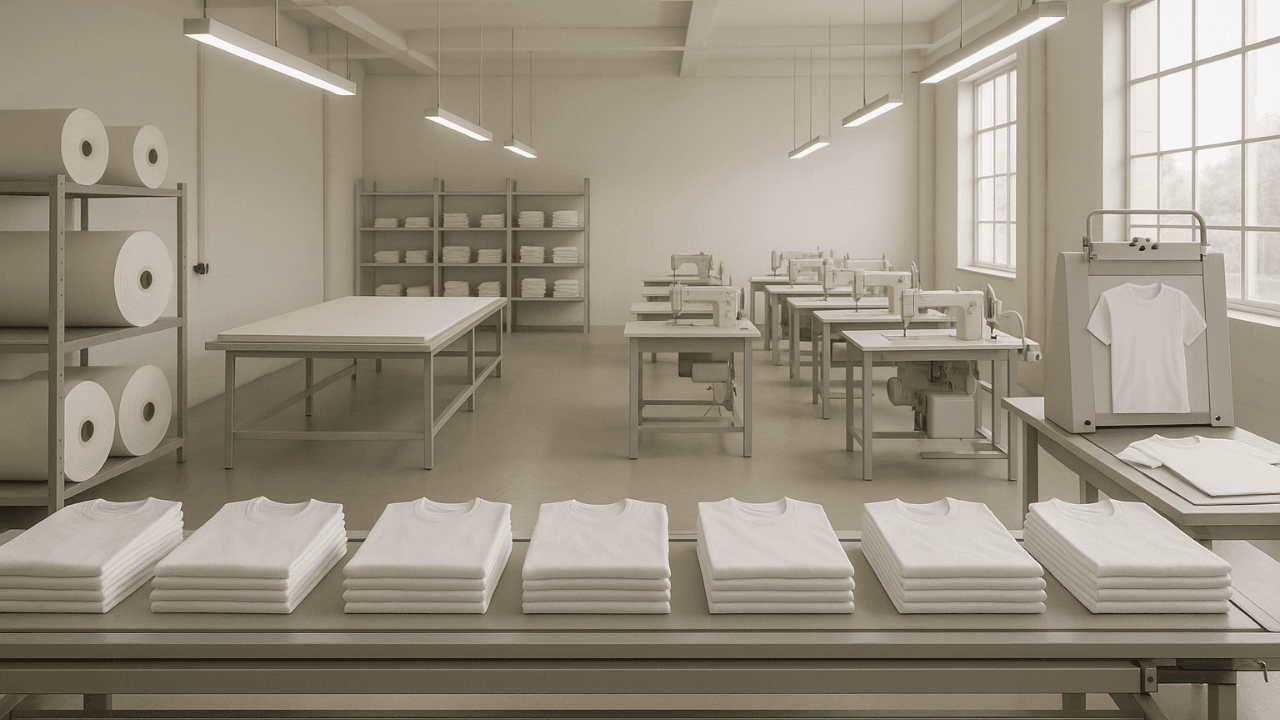
Understanding how a garment is made gives you a huge advantage when you are ordering bulk T-shirts, planning corporate merchandise, or building your own clothing brand. Most people only see the finished product, but behind every T-shirt is a detailed manufacturing process that involves planning, technology, quality control, and coordination among multiple teams. When you know these steps, you can make informed decisions, evaluate manufacturers better, and set the right expectations for pricing, delivery, and quality.
This guide walks you through all the major garment production steps used in the industry today. These are the same steps followed by established manufacturers like factori.com, and they are applicable to anyone ordering T-shirts in bulk, whether for events, corporates, brands, or merchandising.

1. Fabric Sourcing and Material Selection
The entire garment manufacturing process begins with sourcing fabric. This step sets the foundation for quality. Manufacturers choose fabric based on your order requirements, such as fabric type (cotton, polyester, blends, or dry-fit), GSM, colour, and texture.
During sourcing, factories evaluate several parameters:
- Fabric weight (GSM)
- Colour shade consistency across rolls
- Softness and hand-feel
- Shrinkage percentage
- Dyeing and colourfastness
- Fibre quality
Fabric selection is crucial because the right material impacts comfort, durability, and visual appeal. If the fabric quality is compromised at this stage, even the best stitching or printing will not fix the final garment.
2. Fabric Relaxation
Once the fabric arrives at the factory, it is not used immediately. Instead, it undergoes a stage called relaxation. The purpose of relaxation is to allow the fabric to settle naturally so that it adjusts to ambient conditions and releases tension from the rolling process.
Relaxation typically lasts for 12 to 24 hours.
This stage helps:
- Minimise shrinkage
- Improve cutting accuracy
- Prevent twisting and warping
- Ensure uniform measurement across all pieces
Skipping fabric relaxation can lead to fitting issues later, which is why experienced manufacturers always follow this step.
3. Fabric Spreading and Layering
After the fabric has relaxed, it moves to the spreading table. This is where the fabric is layered in multiple sheets to prepare it for cutting. In bulk orders, factories spread anywhere between 40 to 100 layers at once, depending on the fabric thickness and order quantity.
During fabric spreading, technicians ensure:
- Each layer is smooth
- There are no wrinkles or folds
- Tension is evenly distributed
- Fabric grain line is correctly aligned
- Shade variations are checked
Proper spreading ensures that all pieces cut from the layered fabric are uniform and consistent in size.
Follow @factori.com_official to watch how we create custom T-shirts, uniforms, and merch — one order at a time!
4. Marker Making
Before cutting begins, factories prepare a marker. A marker is the layout or blueprint that shows how the various garment components will be cut from the fabric.
A marker contains outlines for:
- Front panel
- Back panel
- Sleeves
- Neck rib
- Pocket (if applicable)
- Any additional design elements
Modern manufacturers use CAD software to create highly efficient markers that reduce fabric wastage and improve consistency.
5. Cutting the Fabric
Once the marker is ready and the spreading is complete, the fabric moves to the cutting section. Cutting can be done manually using straight-knife machines or through automated cutting technology, depending on the scale and accuracy required.
During cutting, operators ensure:
- Accuracy within millimetres
- No shifting of fabric layers
- Blade sharpness for smooth cuts
- Correct alignment with the marker
Precision cutting maintains the garment’s shape and ensures sizing consistency. Any error here will cause fitting issues in the final garment.
6. Printing, Embroidery, or Branding

After cutting, the next step is branding. If your T-shirts require logos, artwork, text, or graphic prints, they move to the printing or embroidery section. This stage varies depending on the branding technique selected.
Common branding methods include:
- Screen printing for high-volume, solid-colour prints
- DTF printing for detailed, multi-colour artwork
- Vinyl printing for names and numbers
- Embroidery for premium finishes such as company logos
Factories handle alignment, colour accuracy, curing temperature, and print durability during this stage. Placement and consistency are especially important in bulk orders.
7. Stitching and Garment Assembly
This is where the garment begins to take shape. Stitching is one of the most important steps in the production line because it determines durability, comfort, and overall finish. A typical sewing line includes a sequence of specialised machines, each assigned to specific tasks.
Key operations include:
- Joining the shoulders
- Attaching the sleeves
- Attaching the rib or collar
- Closing the side seams
- Hemming the bottom and sleeves
- Adding labels (size, wash care, brand tags)
Different types of machines are used, such as:
- Overlock machines for joining panels
- Flatlock machines for sportswear seams
- Single needle machines for finishing
- Rib attachment machines for necklines
Even the smallest stitching inconsistency can impact the final look, which is why factories maintain strict supervision during assembly.
Subscribe to factori.com on YouTube and see how every custom order comes to life — from fabric to finish!
8. Trimming and Thread Cutting
Once stitching is complete, the garment goes through the trimming stage. Any loose threads, fabric scraps, uneven seams, or excess materials are removed manually. This step improves the garment’s appearance and ensures a neat finish.
Trimming might look simple, but it has a big impact on the perceived quality of the product.
9. Washing (Optional Depending on Fabric)
Some garments, especially cotton T-shirts, undergo a washing process before finishing. Washing enhances the fabric’s feel, stability, and appearance. The type of wash depends on the fabric and the final look desired.
Common washing types:
- Bio-wash
- Enzyme wash
- Silicon softener wash
- Stone wash for textured effects
Washing helps reduce shrinkage and improves softness but is not always necessary for garments like polyester or corporate wear.
10. Quality Control and Inspection
Quality control, or QC, is one of the most crucial steps in garment production. Each piece is examined carefully to ensure it meets the required standards.
QC checks include:
- Stitching quality
- Print accuracy and durability
- Fabric defects
- Measurements and fit
- Colour consistency
- Label correctness
- Finishing and overall appearance
Factories follow an AQL (Acceptable Quality Level) system to maintain consistency. This ensures that the final product delivered to you is reliable and meets expectations.
11. Ironing, Folding, and Packaging
After passing quality checks, the garment moves to the finishing line. This includes:
- Steam ironing for a clean, wrinkle-free appearance
- Folding as per client specifications
- Adding size stickers
- Packing in individual polybags
- Tagging and labelling if required
These finishing touches make the garment look professional and ready for retail or distribution.
12. Final Dispatch and Logistics
Once the garments are packed and cartonised, they move to the dispatch area. The logistics team weighs, seals, and labels each carton before sending it through the chosen transport method.
Clients receive the shipment through courier, cargo, or express service. Efficient dispatch ensures timely delivery, which is a major factor in customer satisfaction for bulk garment orders.
Conclusion
The garment production process is a well-organised and highly detailed workflow that ensures every T-shirt is consistent, comfortable, and durable. Each step, from fabric sourcing to final delivery, plays a significant role in determining the overall quality of the garment. Whether you are a corporate ordering 500 T-shirts, an event organiser preparing uniforms, or a brand planning an entire collection, understanding these steps helps you communicate better, avoid delays, and get the product quality you expect.
A clear understanding of garment production also helps you choose the right manufacturer, evaluate pricing realistically, and manage timelines confidently. When every step is handled with care, the final garment reflects that quality.
FAQs
The main steps involved in garment production include fabric sourcing, fabric relaxation, spreading, marker making, cutting, printing or embroidery, stitching, trimming, optional washing, quality control, finishing, and final dispatch. Each step ensures accuracy in measurement, consistency in fit, and overall product quality. Factories follow this sequence to maintain efficiency and reduce errors in bulk manufacturing.
The time required to manufacture a bulk order of T-shirts depends on order quantity, fabric availability, printing complexity, and factory capacity. On average, bulk T-shirt manufacturing takes between 7 to 15 days for standard orders. Larger quantities or custom printing may extend the timeline to 15 to 25 days. When fabric is in ready stock and branding is simple, production can be completed faster.
T-shirt stitching involves a combination of specialised sewing machines. The most commonly used are overlock machines for joining panels, flatlock machines for sportswear seams, single-needle machines for finishing, bar tack machines for reinforcement, and rib attachment machines for collars. Some factories also use cover-stitch machines for hems. Each machine plays a specific role in shaping and strengthening the garment.
Quality checks in garment manufacturing include measurement verification, stitching inspection, print and embroidery accuracy, colour consistency, fabric defect checks, shrinkage testing, and finishing inspection. Inspectors look for loose threads, misalignment, stains, holes, uneven seams, and incorrect labels. Most factories follow AQL standards to maintain uniform quality across all pieces before packaging.
Fabric relaxation is important because it allows the material to release tension accumulated during rolling, packing, and transportation. When fabric relaxes for 12 to 24 hours, it stabilises in size and reduces the risk of shrinkage after cutting. This ensures accurate measurements, consistent sizing, and better-fitting garments. Skipping relaxation can result in twisting, shrinking, and misaligned panels after stitching.
Leave a Reply