
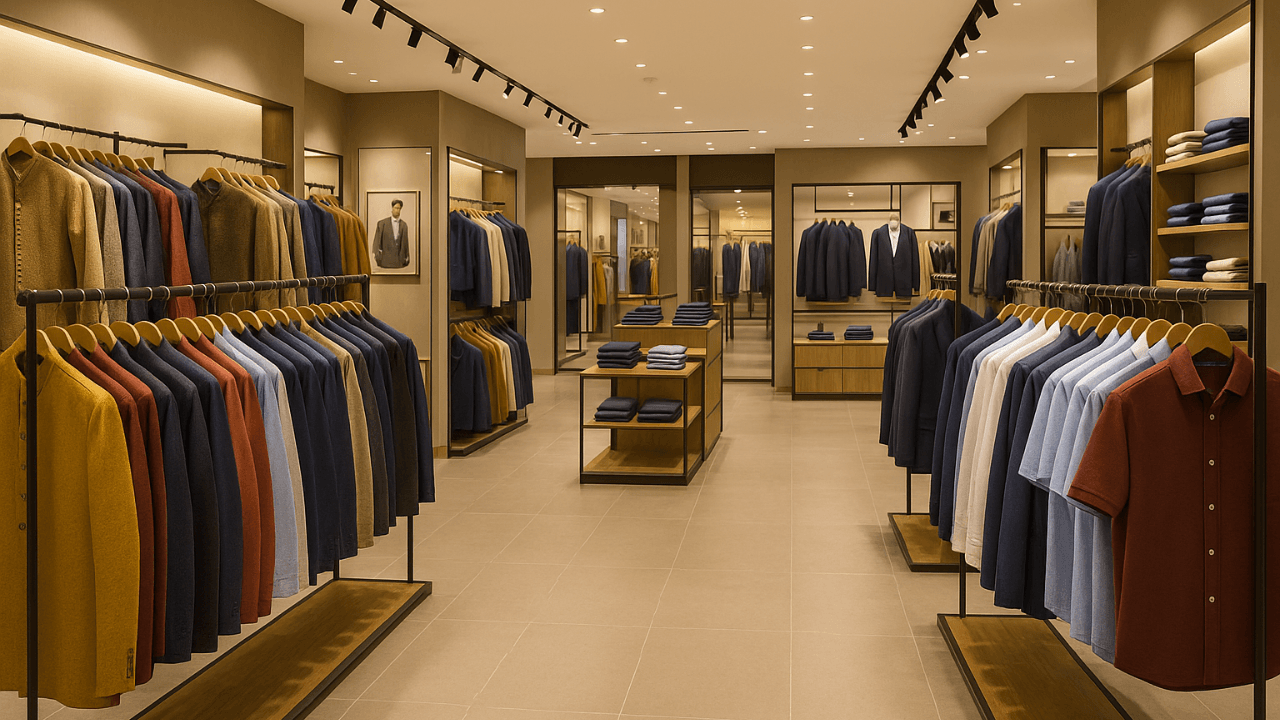
India’s apparel market keeps evolving — driven by rising incomes, fast-changing fashion tastes, and increased demand for organized retail. For entrepreneurs, this offers a big opportunity in clothing franchises: you get brand strength, operational support, and a tested business model. But to succeed, you must choose the right franchise — one that fits your city, customer base, and business goals.
Here’s a detailed look at the top clothing franchises in India in 2025 — what they offer, why they work, and who they suit best.
Best Clothing Franchise Opportunities in India

1. Biba
One of India’s most recognized brands for women’s ethnic wear, Biba remains a go-to for customers seeking quality salwar-suits, kurtis, festive wear and daily ethnic outfits.
Why it works:
- Evergreen demand: Ethnic wear never really goes out of style in India. With festivals, weddings, office wear and everyday ethnic fashion, Biba enjoys consistent demand all year.
- Strong brand familiarity: Customers across urban and semi-urban India recognize and trust Biba, which reduces the need for heavy marketing by franchise owners.
- Wide demographic appeal: From college-going girls to office women to mature customers — a broad customer base ensures stable footfall.
- Festive & seasonal spikes: During festivals and wedding seasons, sales often surge, boosting overall yearly revenue.
For franchisees in metros, Tier-2 or Tier-3 cities, Biba’s consistent demand and brand pull make it a relatively stable bet.
2. FabIndia
FabIndia occupies a niche space combining traditional Indian crafts, artisanal fashion, and a slightly premium positioning. They cater to customers who care about fabric quality, heritage-inspired designs, and conscious fashion.
Why it works:
- Distinct positioning: Unlike mass-market fashion brands, FabIndia appeals to those valuing craftsmanship, natural fabrics and ethnic-contemporary fusion. That gives the franchise a niche but loyal clientele.
- Higher average billing: Customers shopping here are often willing to spend more — meaning better per-transaction revenue for franchisees.
- Appeal in urban & semi-urban areas: In cities and towns where shoppers are becoming more quality-conscious, FabIndia stores draw customers looking for a different aesthetic from fast-fashion.
- Low overlap with discount brands: Because FabIndia targets a different customer mindset (quality + heritage), they avoid direct competition with budget or fast-fashion retail — giving a safer long-term outlook.
For entrepreneurs seeking a moderately premium, stable fashion franchise, FabIndia offers a more curated alternative.
Subscribe to factori.com on YouTube and see how every custom order comes to life — from fabric to finish!
3. W (by TCNS Clothing)
W is a modern brand catering to women who want contemporary Indo-western and ethnic-fusion clothing — ideal for young professionals, college students and working women.
Why it works:
- Trendy & updated collections: W constantly refreshes its lines to match fashion trends, which keeps customers coming back rather than buying once.
- Balance of style & affordability: The brand offers good design and quality at price points that suit middle-income buyers, making it accessible to many.
- Strong urban demand: In metro and Tier-1 cities (and increasingly in Tier-2 towns), demand for fusion wear — neither heavy ethnic nor purely western — is rising rapidly.
- Repeat customers and wardrobe buyers: Women often shop multiple pieces (work wear, casual, festive), increasing average ticket size per customer.
For entrepreneurs looking for a high-turnover model among urban and semi-urban women, W offers a good balance of demand and profitability.
4. Peter England
A stalwart in men’s formal and semi-formal wear, Peter England offers a strong franchise opportunity for entrepreneurs targeting working professionals, students and corporate customers.
Why it works:
- Large addressable market: With millions of students entering colleges and young professionals joining the workforce each year, demand for formal wear remains high.
- Corporate & office wear demand: Many buyers need shirts, trousers, formal outfits — a relatively stable demand segment, less fad-prone.
- Affordable and reliable quality: Peter England balances quality with affordability, attracting both price-conscious and quality-aware customers.
- Brand trust and national presence: Its wide presence and brand name give customers confidence — reducing the marketing burden for franchise owners.
This makes Peter England ideal for cities with colleges, offices and relatively stable income demographics.
5. Louis Philippe
A premium men’s wear brand, Louis Philippe targets customers with higher purchasing power: white-collar professionals, corporate staff, and buyers seeking formal or semi-formal attire with a premium finish.
Why it works:
- Premium positioning & margins: Higher price points translate to better per-sale revenue, which can mean improved profit margins if managed well.
- Appeal to aspirational customers: In Tier-1 and Tier-2 cities where aspirational buying is rising, many customers seek a “premium label” — and Louis Philippe fits this niche.
- Corporate demand and occasion wear: Office wear, business meetings, formal events — all ensure constant demand beyond just casual wear.
- Selective customer base, but higher spend per customer: Fewer customers than mass-market brands, but higher spendability per customer balances it out.
This is a good fit for franchisees in cities with a mature, salaried population and demand for premium Western/Formal wear.
Latest article: T-Shirt Manufacturing in India: How to Start, Scale & Avoid Costly Mistakes
6. Jockey
Jockey’s strength is in innerwear, athleisure and comfort wear — a space with steady demand across demographics.
Why it works:
- Essential product category: Innerwear and athleisure are basic wardrobe needs. People buy/refill continuously — making demand almost evergreen.
- High repeat purchases: Innerwear is consumable, wears off — leading to regular repeat business, unlike occasional fashion buys.
- Wide age & income range: From students to working adults to older customers — innerwear demand is universal, offering broad customer reach.
- Brand trust and quality perception: Jockey enjoys strong brand recall; customers often trust established innerwear brands over unbranded local alternatives.
For entrepreneurs looking for stability and consistent footfall without over-reliance on fashion trends, Jockey is a smart, low-risk franchise option.
7. Max Fashion
Max Fashion covers a wide audience — families, young adults, budget-conscious buyers — with affordable, trendy fashion. It works across casual wear, kidswear, women’s wear and more.
Why it works:
- Wide product range: Casual wear, children’s wear, everyday clothing — broad catalog means more customer segments.
- High footfall & fast inventory turnover: Affordable pricing and frequent style changes keep inventory moving.
- Mass-market appeal: Especially in middle-income families and younger shoppers, who want style but value affordability.
- Resilience to economic fluctuations: Budget to mid-range pricing makes it resilient even if consumer sentiment dips.
For entrepreneurs targeting mass markets, budget-conscious buyers, or multi-segment audiences (families, youth, kids), Max Fashion is a strong, volume-driven choice.
8. Aurelia
Aurelia targets women’s ethnic wear but with an emphasis on affordability and everyday wear — a segment especially strong in smaller cities, towns, and suburbs.
Why it works:
- High demand in Tier-2 & Tier-3 markets: Ethnic wear remains central in smaller cities and towns, where price sensitivity is higher and fashion cycles slower.
- Affordable and accessible: The pricing strategy appeals to shoppers seeking value without compromising on style.
- Wide customer base: From young women to middle-aged women — a large segment regularly buys ethnic wear for work, festivals, casual outings.
- Lower competition from premium labels: Because price point is value-based, Aurelia attracts customers who might avoid premium brands.
This makes Aurelia a reliable franchise for entrepreneurs targeting emerging markets, secondary cities, or price-sensitive consumer bases.
9. factori.com
Standing apart from traditional ready-made fashion franchises, factori.com brings a custom apparel + bulk / B2B + experience-centre model — ideal for entrepreneurs who want to tap into corporate uniforms, event merchandise, batch orders, and custom apparel demand. Why factori.com works — and why it’s among the top franchise opportunities now
- Low initial investment, high scalability: According to its listing as a franchise opportunity, the investment required is relatively modest (in the range of ₹5–10 lakhs), and space requirement is small (250–500 sq.ft), making it accessible to many entrepreneurs.
- Modern “Experience Centre” model: factori.com runs experience centres (showrooms / display-cum-ordering outlets) in multiple Indian cities. These centres allow clients to feel and assess fabrics, examine samples, explore customization options, and place bulk or custom orders — offering a unique customer experience compared to standard retail stores.
- High demand in B2B, corporate & institutional segment: Through corporate uniforms, event merchandise, promotional apparel, bulk orders for colleges, organisations, events — factori.com taps into a large and often under-served demand segment.
- Efficient manufacturing + supply chain + flexible order sizes: Their business model leverages bulk raw-material procurement and a network of manufacturing partners, enabling them to offer competitive prices while handling bulk orders reliably.
- Strong service proposition — customization, professionalism, brand-level quality: Factori.com emphasizes transparency in pricing, consistent quality, quick turnaround times, and customization (uniforms, t-shirts, hoodies, bags, corporate wear) — giving franchise partners trust-worthy deliverables.
- Recurring and repeat business potential: Because B2B clients (companies, events, institutions) often need repeated orders — corporate batches, new joiners, merchandise renewals — a franchisee can build stable long-term revenue, unlike seasonal fashion retail.
For entrepreneurs looking for a low-risk, scalable, future-oriented apparel business — especially those comfortable working with bulk orders, B2B clients, and custom apparel — factori.com offers a strong franchise alternative compared to conventional fashion retail.
Follow @factori.com_official to watch how we create custom T-shirts, uniforms, and merch — one order at a time!
How to Choose Which Franchise Is Right for You

Choosing the right clothing franchise depends on several factors. Here’s a simple decision framework:
Know Your City & Customer Base
- Urban, Tier-1 cities with working professionals → consider premium, formal, or fast-fashion (like W, Louis Philippe, Peter England).
- Tier-2 / Tier-3 cities or price-sensitive markets → value fashion or ethnic wear (like Aurelia, Max Fashion, Biba, W).
- Corporate or institutional demand (offices, colleges, events) → consider custom apparel / B2B orientation (like factori.com).
Investment & Space Required
Franchise cost, store size, and inventory holding vary widely: from large formatted stores with high inventory (fashion chains) to compact experience centres with minimal inventory (custom apparel franchises).
Sales Pattern: One-time vs Recurring
If you prefer high repeat orders (corporate uniforms, batch orders, renewals) — B2B & custom apparel franchises are good.
If you prefer high-volume retail sales (seasonal fashion, walk-in customers), fashion-retail franchises may suit better.
Operational Complexity & Risk
Standard fashion franchises generally require inventory management, walk-in customer handling, seasonal demand variations. B2B/custom apparel franchises focus more on order management, lead time, supply chain — but have lower inventory risk if managed well.
Long-term Vision: Scalability & Growth
If you plan to grow across cities, expand product lines, or scale operations, prioritize brands/franchises with good supply chains, brand strength, & scalable model (custom apparel or established retail chains).
FAQs
Custom-apparel and B2B-oriented franchises — such as factori.com — often yield repeated bulk orders from corporates, institutions and events, giving stable recurring revenue.
It varies widely — from relatively low (₹5–10 lakhs) for compact experience-centre / custom apparel models, to higher amounts for full-format fashion retail stores (depending on brand, store size and inventory).
Yes. Value fashion or ethnic wear brands with affordable pricing (like Aurelia, Max Fashion, Biba) often perform well in smaller cities with strong demand for affordable apparel.
Traditional stores focus on ready-made fashion (casual wear, formal wear, ethnic, everyday wear), target individual consumers, and rely on footfall. Custom/B2B franchises focus on bulk orders — uniforms, event merchandise, corporate wear — generally deal with institutions/companies, and often have lower inventory risk.
Yes — with businesses, educational institutes, NGOs, event managers increasingly needing uniforms, branded merchandise, bulk orders and corporate apparel, demand for custom apparel is rising. This makes custom apparel franchises a promising long-term bet.
Leave a Reply