
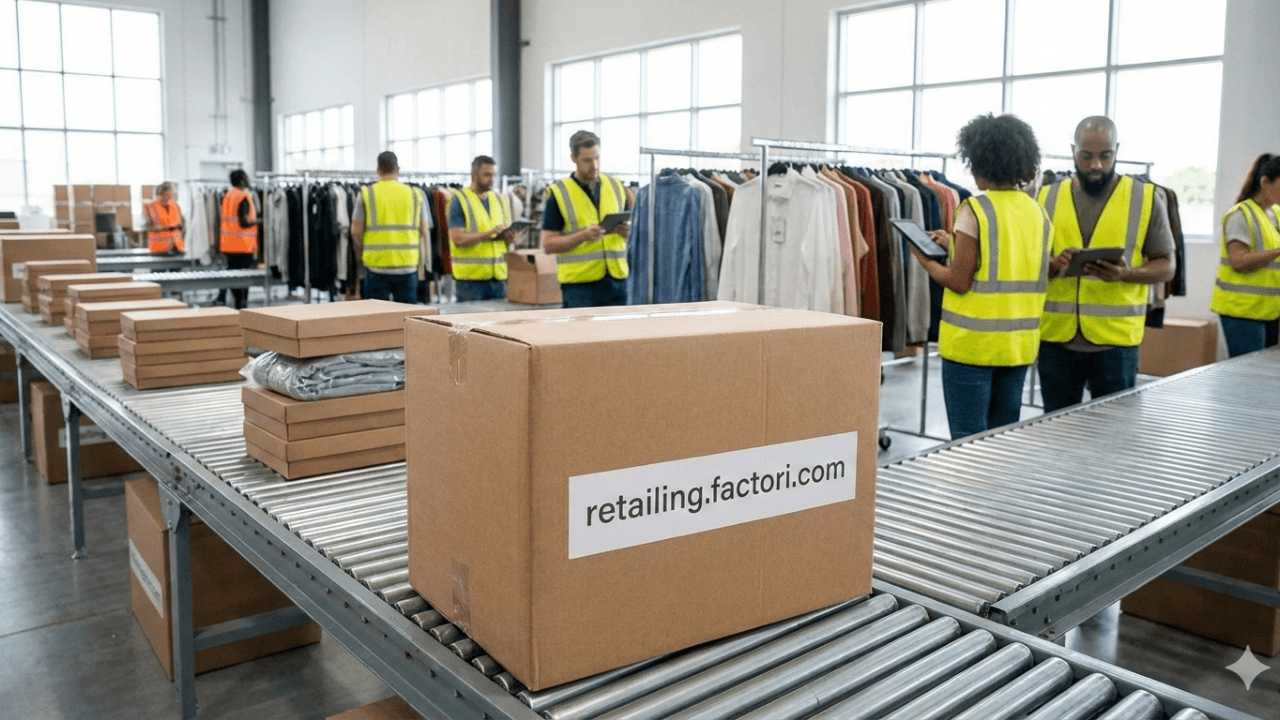
Online apparel retail is often presented as a marketing game. Launch a website, post content daily, run ads, collaborate with influencers, and sales will follow. In reality, most online apparel retailers do not fail because of poor marketing or weak demand. They fail because their backend cannot support growth.
As order volumes increase, small inconsistencies in sourcing, sizing, fabric quality, and production timelines compound into large operational failures. Returns increase, margins shrink, customer trust erodes, and growth becomes unsustainable.
This article explains how scalable online apparel retail actually works, what separates stable retailers from fragile ones, and why factory-backed retail ecosystems are increasingly essential for long-term success.
What “Inline Apparel Retail” Actually Means in Today’s Market
Inline apparel retail refers to selling clothing products directly to customers through digital-first channels. This includes:
- Brand-owned websites
- Marketplaces such as Amazon and Flipkart
- Social commerce through Instagram and WhatsApp
- Hybrid models combining offline stores with online distribution
What is often misunderstood is that inline retail is not defined by the sales channel. It is defined by the operating model behind the channel.
A scalable inline apparel retailer is one who can:
- Deliver the same product quality across multiple production cycles
- Maintain consistent sizing and fit for repeat customers
- Reorder top-selling products without quality drift
- Manage inventory without excessive dead stock
- Scale marketing without backend breakdown
Without backend control, online retail becomes unstable very quickly.
Why Most Online Apparel Retailers Fail to Scale
The failure pattern in online apparel retail is surprisingly consistent.
Early success is usually driven by:
- Attractive designs
- Aggressive pricing
- Early marketing traction
But growth introduces pressure on the backend. At that point, retailers encounter:
- Inconsistent fabric quality across batches
- Size variations between production runs
- Delayed deliveries and missed launch timelines
- Increased return rates and customer complaints
- Margin erosion due to rework and wastage
These are not branding problems. They are manufacturing and sourcing problems.
Online retail exposes backend weaknesses faster than offline retail because customer feedback is immediate, public, and unforgiving.
Subscribe to factori.com on YouTube and see how every custom order comes to life — from fabric to finish!
The Five Core Pillars of a Scalable Online Apparel Retail Business

Across markets, successful online apparel retailers converge on the same fundamentals.
1. Product Consistency
Every repeat order must feel identical to the previous one. Fabric texture, color shade, weight, and finishing must remain stable. Inconsistency breaks brand trust faster than price increases.
2. Size Predictability
Size charts only work if production follows them precisely. A “Medium” that fits differently in each batch increases returns and kills repeat purchases.
3. Fabric and Construction Reliability
Retail customers evaluate apparel quality after multiple washes. Stitching strength, fabric shrinkage, and colorfastness directly affect brand reputation.
4. Supply Repeatability
Scalable retail requires the ability to reorder the same SKU multiple times with minimal variation. One-off good batches do not build businesses.
5. Inventory Discipline
Retailers who buy reactively accumulate dead stock. Retailers who plan collections and reorder cycles protect cash flow and margins.
These pillars are operational, not aesthetic. Most online retailers learn this only after losses.
Why Sourcing Is the Single Biggest Risk Area in Online Apparel Retail
Sourcing is often treated as a transaction. In reality, it is an operating system.
Common sourcing failures include:
- Working with traders who outsource production inconsistently
- Sampling from one factory and bulk producing in another
- Changing vendors frequently to chase marginal cost savings
- Lack of documented specifications for fabric, GSM, and stitching
Each decision introduces variability. Variability leads to unpredictability. Unpredictability makes scaling impossible.
In online retail, predictability is more valuable than the lowest price.
Why Factory-Backed Retail Models Create Stability
Factory-backed retail does not mean owning factories. It means operating within a system that provides:
- Standardized production processes
- Documented quality benchmarks
- Controlled sourcing channels
- Repeatable manufacturing outcomes
This model allows online retailers to shift focus away from constant supplier management and toward brand building, customer experience, and distribution.
For serious retailers, manufacturing consistency becomes infrastructure, not an ongoing experiment.
How retailing.factori.com Fits into the Inline Retail Operating Model
Modern apparel retail requires a bridge between manufacturing capability and retail execution.
A retail-focused manufacturing ecosystem enables retailers to:
- Access retail-ready product categories
- Maintain consistent production standards
- Reduce trial-and-error sourcing
- Scale reorders with confidence
retailing.factori.com fits into the stage where retailers move from product ideas to repeatable retail execution. It acts as an operational layer that reduces risk and increases predictability without requiring retailers to manage factories directly.
This approach aligns manufacturing discipline with retail agility.
Latest article: How Brands Can Turn T-Shirts into Long-Term Marketing Assets
Choosing the Right Products as an Online Apparel Retailer
Product selection in online retail is a strategic decision, not a creative one.
Fabric Selection
The wrong fabric increases returns, complaints, and customer dissatisfaction. Fabric choice must align with usage, climate, and durability expectations.
GSM and Perceived Value
Higher GSM does not always mean better, but consistency in GSM builds trust. Customers subconsciously associate weight stability with quality.
Category Selection
Entry-level retailers perform better with repeat-demand products such as t-shirts and hoodies. Institutional and corporate categories offer predictable bulk demand.
SKU Rationalization
Fewer SKUs with deeper inventory outperform wide catalogs with shallow stock. Online retail rewards depth, not variety.
Pricing, Margins, and Inventory Planning in Online Apparel Retail
Retail pricing is deeply connected to sourcing discipline.
Retailers with stable manufacturing:
- Predict margins accurately
- Reduce wastage and rework costs
- Lower return and replacement expenses
- Maintain healthier cash cycles
Inventory planning becomes more scientific when production outcomes are predictable. This allows retailers to reorder bestsellers instead of gambling on new designs every cycle.
The Ideal Factory-to-Customer Workflow for Inline Retail
A stable online apparel retail workflow typically follows this sequence:
- Product selection based on repeat demand
- Sampling aligned with final production standards
- Bulk production using documented specifications
- Branding, labeling, and packaging consistency
- Online launch and customer feedback tracking
- Reorder cycles without quality deviation
This loop turns retail into a system rather than a series of experiments.
Who Benefits Most from a Factory-Backed Retail Model
This operating model is especially effective for:
- First-time online apparel retailers
- Offline retailers expanding digitally
- D2C brands moving beyond early traction
- Retailers serving corporate or institutional buyers
In each case, backend reliability directly influences growth potential.
Common Strategic Mistakes Online Apparel Retailers Make
Even motivated retailers often repeat the same errors:
- Scaling marketing before backend stability
- Launching too many products too early
- Ignoring quality drift across batches
- Treating sourcing as short-term procurement
These mistakes are expensive but avoidable with the right operating model.

Why Online Apparel Retail Is Now an Ecosystem Problem
Online apparel retail has matured. It is no longer about individual suppliers or viral designs. It is about systems that support repeatability, predictability, and scale.
Retailers who succeed long-term build ecosystems that integrate sourcing, manufacturing discipline, and retail execution. Those who don’t eventually hit operational ceilings.
In modern apparel retail, the backend defines the brand.
Final Perspective
Anyone can start selling apparel online. Very few can build a scalable online apparel retail business.
The difference lies in how seriously the backend is treated. Factory-backed retail ecosystems allow retailers to reduce risk, protect margins, and scale with confidence.
That is how durable online apparel brands are built.
FAQs
Online apparel retailers usually source products through manufacturers, factory-backed platforms, or wholesale production partners. Scalable retailers prefer sourcing models that offer consistent quality, standardized sizing, and repeatable production rather than one-off bulk purchases.
The biggest challenge in online apparel retail is maintaining consistent product quality across multiple production cycles. Inconsistent sizing, fabric variation, and delayed deliveries often lead to high returns, negative reviews, and margin losses.
New online apparel retailers should start with limited, focused inventory rather than large assortments. Holding fewer SKUs with the ability to reorder reliably helps reduce dead stock and improves cash flow while demand patterns are still being validated.
Online clothing brands often face high return rates due to sizing inconsistencies, fabric mismatch, and quality variation between batches. Reliable manufacturing and standardized product specifications significantly reduce these issues.
An online apparel retail business becomes scalable when it can repeat production without quality variation, plan inventory accurately, and fulfill customer expectations consistently. Backend control over sourcing and manufacturing is more important than rapid marketing growth
Leave a Reply